
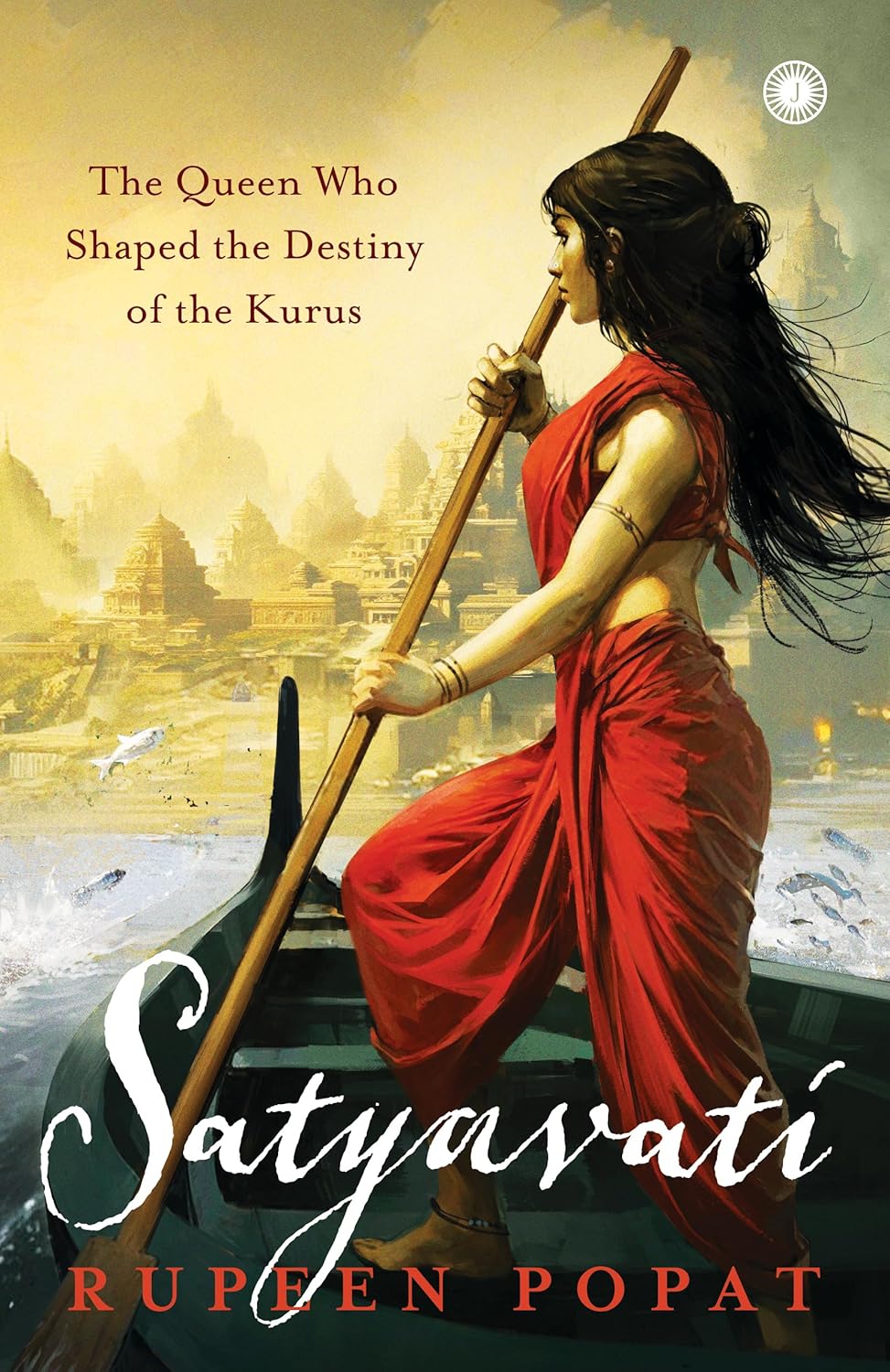
The Mahabharata is usually remembered for the thunder of chariots and the clash of cousins on the fields of Kurukshetra. But in Satyavati: The Queen Who Shaped the Destiny of the Kurus, Rupeen Popat pulls us back from the battlefield to the riverbanks where it all began. He shifts the lens away from the warriors and focuses on the woman who, through sheer will and brutal pragmatism, essentially built the stage upon which the great epic was played.
From Fish-Smell to Fine Silk
The narrative follows the transformation of Matsyagandha—the boatman’s daughter who smelled of the river—into Satyavati, the formidable Matriarch of the Kuru dynasty. Her meeting with King Shantanu isn’t framed as a star-crossed romance, but as a tectonic shift in history. Popat handles the infamous “condition” of her marriage—the demand that her children, and not the rightful heir Devavrata (Bhishma), inherit the throne—with a refreshing lack of judgment. He doesn’t paint her as a villain; he paints her as a woman who understands that in a world governed by men, power is the only true currency.
The Heavy Crown of Continuity
The meat of the novel lies in the “what happens next.” When Shantanu dies and her sons fail to secure the lineage, Satyavati is forced into a corner. This is where Popat’s writing shines. He explores the moral gray areas of her choices—specifically her decision to call upon Sage Vyasa to ensure the bloodline continues.
The book avoids the trap of romanticizing royal life. Instead, we see the loneliness of the throne. Satyavati isn’t just a queen; she is a crisis manager for a crumbling dynasty. Her relationship with Bhishma is particularly well-drawn—a complex bond forged in duty, mutual respect, and the shared trauma of a vow that defined both their lives.
A Restrained, Grounded Narrative
Popat’s prose is lean and purposeful. He avoids the “purple prose” and over-the-top flowery descriptions that plague many mythological retellings. Instead, he lets the weight of the decisions do the talking. The pacing is deliberate; it takes its time on the Yamuna, allowing us to feel Satyavati’s roots before thrusting us into the claustrophobic politics of the Hastinapur court.
The Verdict
Satyavati is a character study of a woman who refused to be a footnote. While the Mahabharata often treats her as a catalyst who then disappears into the background, Popat keeps her front and center, showing us the emotional and moral toll of being the person who makes the “necessary” choices.
For anyone who loves the Indian epics but is tired of the same “good vs. evil” tropes, this is a must-read. It’s a quiet, powerful exploration of legacy, and a reminder that the most significant battles aren’t always fought with bows and arrows—they’re fought in the corridors of power and the silence of a queen’s chambers.


 Bookshotsapp
Leave a comment