
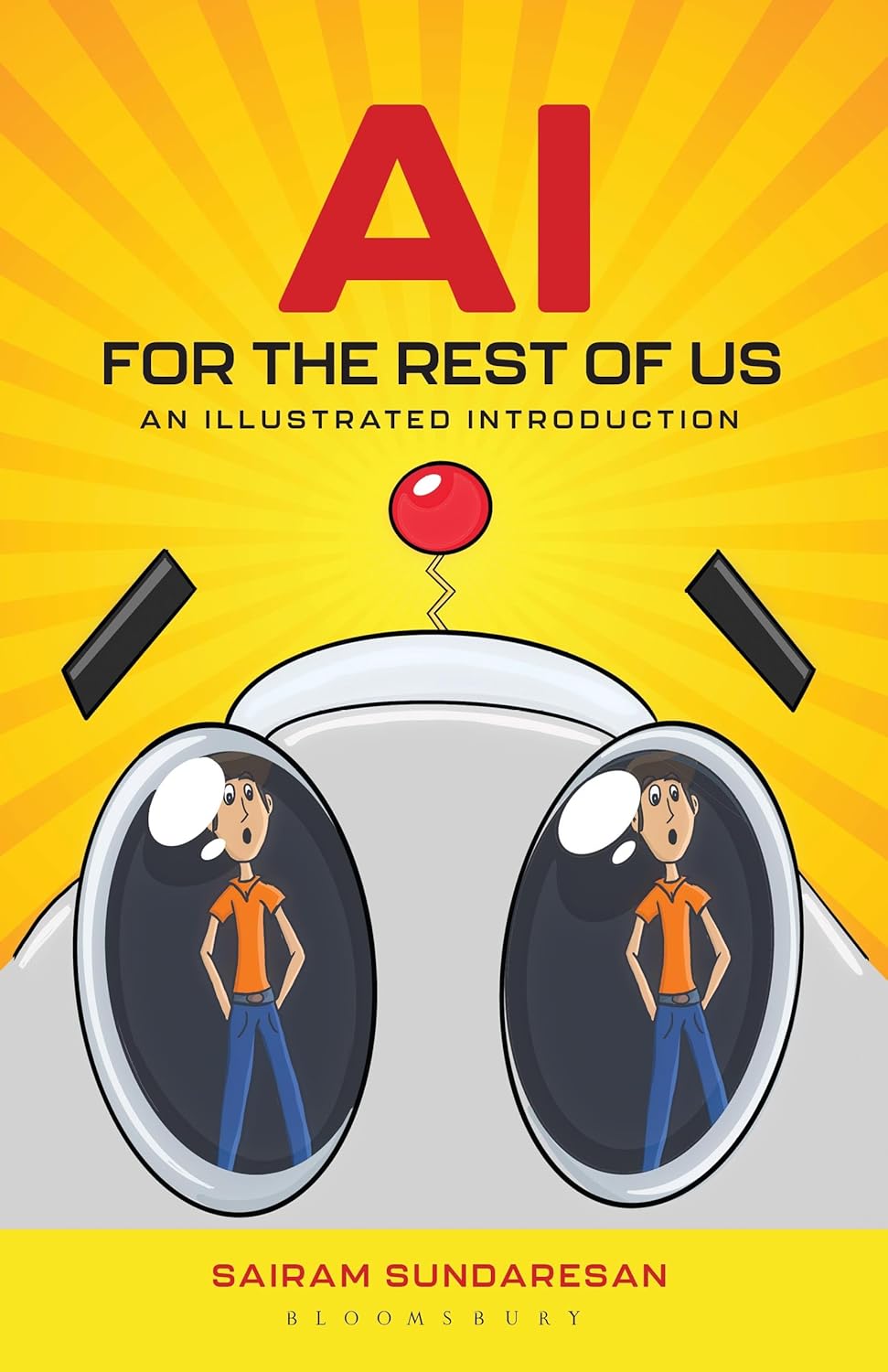
AI for the Rest of Us: An Illustrated Introduction by Sairam Sundaresan arrives at a moment when artificial intelligence is everywhere—yet still feels oddly out of reach for most people. The promise of the book is simple: you shouldn’t need a technical background to understand one of the most transformative forces of our time. And it delivers on that promise with clarity, wit, and an unusually human touch.
Sundaresan, a veteran AI researcher, approaches the subject not as a gatekeeper but as a translator. He breaks down the architecture of AI—machine learning, neural networks, natural language processing, vision systems, and recommender engines—into ideas that feel intuitive rather than intimidating. What makes this work stand out is not just the breadth of topics it covers, but the way it carries the reader through them. The writing is clean, the explanations are visual and often playful, and the use of illustrations adds a layer of accessibility that most AI books lack.
The structure of the book works in its favor. It begins with the larger context—the scale of the AI revolution—before moving steadily into the mechanics: algorithms, neural networks, and the now-ubiquitous transformers and large language models. From there, it shifts into application, showing how these systems power the technologies we interact with every day, from recommendation engines to generative tools. This progression—from concept to real-world relevance—keeps the reader grounded throughout.
What’s particularly effective is the book’s refusal to indulge in either hype or fear. Sundaresan strips away the buzzwords and focuses on what AI actually is: a set of systems built on logic, data, and human ingenuity. Along the way, he uses vivid, often humorous examples—why AI might mistake a dog for a donut, or how machines “learn” patterns—to turn abstract ideas into memorable insights.
At its core, the book is about empowerment. It doesn’t aim to turn readers into engineers; it aims to make them informed participants in an AI-driven world. By the end, you’re not just familiar with the terminology—you’re better equipped to understand where AI shows up in your life, how it works behind the scenes, and how to think critically about its impact.
AI for the Rest of Us fills an important gap. In a space crowded with dense technical manuals and speculative futurism, it offers something far more useful: a clear, grounded, and engaging guide for anyone who simply wants to understand what’s going on—and what comes next.


 Bookshotsapp
Leave a comment