
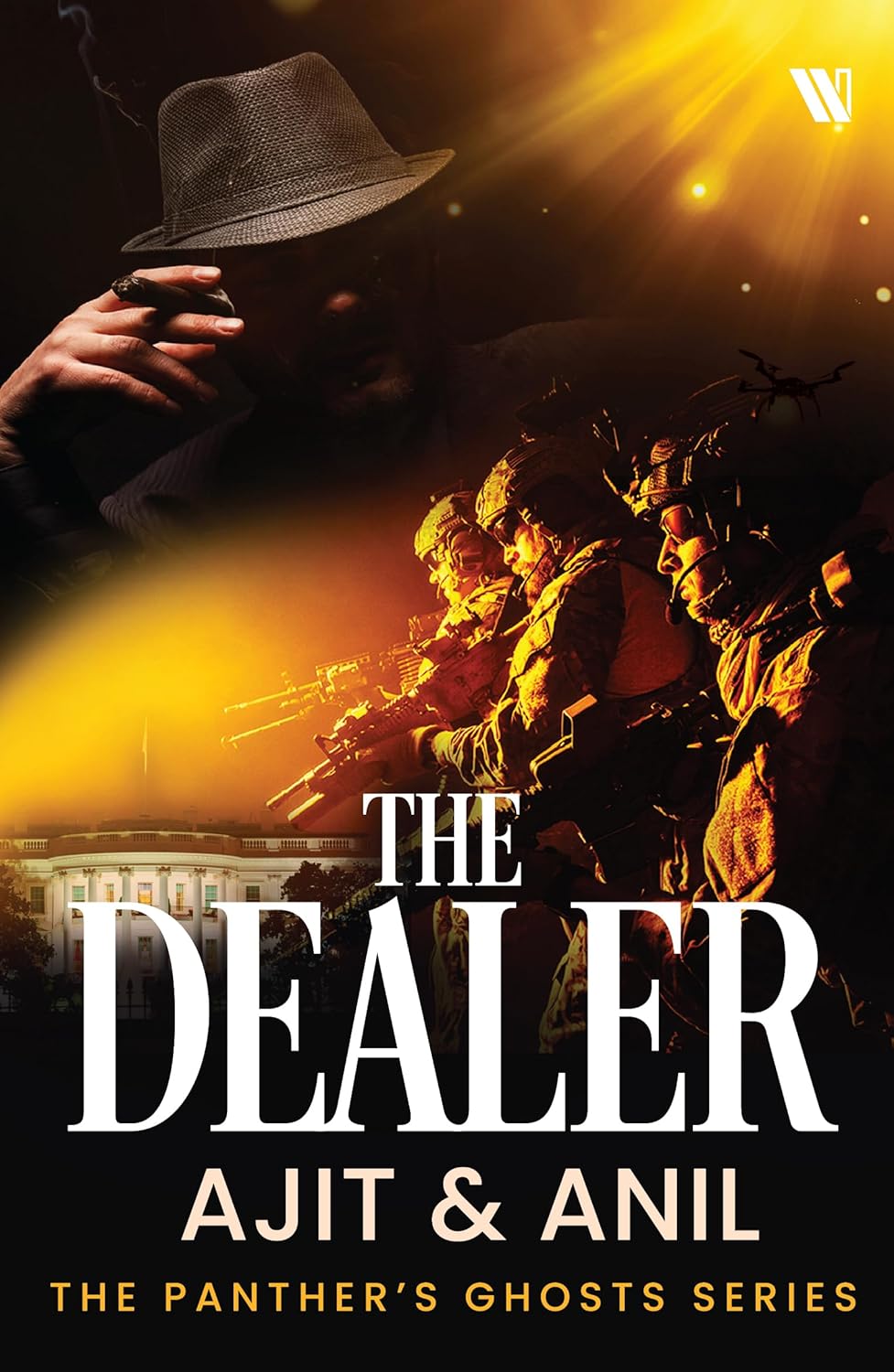
Ajit Menon and Anil Verma’s The Dealer isn’t your standard airport spy novel. It’s an ambitious attempt to map out the messy, hidden links between global power plays and ground-level conflict. While it’s technically fiction, the narrative feels uncomfortably close to the headlines, thriving on a sense of urgency that makes the stakes feel immediate.
The story hits the ground running at the Ayodhya consecration ceremony. Using such a massive, culturally charged event as the backdrop for an assassination attempt is a bold move, and it effectively anchors the book in a very recognizable reality. But the authors don’t stay local for long. What starts as a hunt for a terrorist cell quickly spirals into a global conspiracy involving a “Deep State” operating out of the U.S. This shift—moving from regional India-Pakistan tension to a much larger, invisible chessboard—is where the book finds its real momentum.
At the center of the chaos is “The Dealer.” He’s a classic spy-genre antagonist—less a person and more a rumor. He represents total deniability and clinical precision, making him a perfect foil for the Panther’s Ghosts. This elite unit operates on the doctrine of “defensive offense”: hitting the enemy before they even know they’re a target and leaving no paper trail behind. Their missions skip across borders—from Tibet to Washington to Islamabad—giving the whole thing a sweeping, cinematic feel.
The writing clearly reflects the authors’ backgrounds in film. The scenes are highly visual, the pacing is relentless, and the stakes never really drop. It reads like a screenplay in places, prioritizing movement and action over long-winded internal monologues. This “inspired by real events” framing adds a layer of plausibility that forces you to wonder how much of this “fiction” is actually happening in the shadows.
Ultimately, The Dealer is a high-energy look at modern espionage where the lines between nations and ideologies are completely blurred. It’s a solid pick for anyone who prefers their thrillers with a heavy dose of geopolitics and a reminder that the most important battles are usually the ones we never hear about.
 Bookshotsapp
Leave a comment