
We all know the stories of marches, protests, and revolutionaries. But what if some of the most decisive battles for India’s freedom were fought not on the streets—but inside courtrooms?
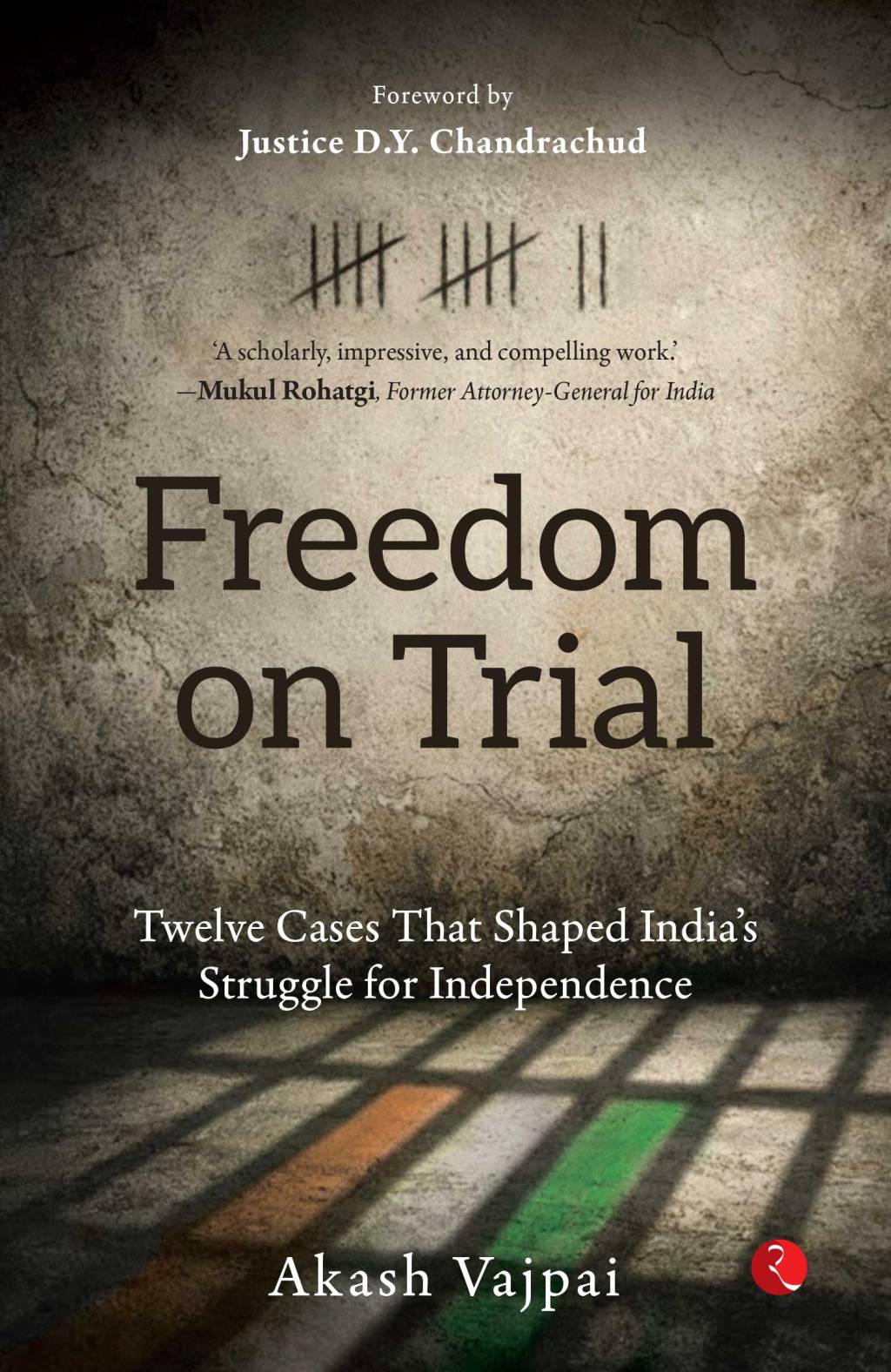
Advocate Akash Vajpai makes exactly that case in his new book, Freedom on Trial: Twelve Cases That Shaped India’s Struggle for Independence.
The book uncovers a forgotten chapter of history: the colonial trials where India’s freedom fighters turned biased proceedings into powerful acts of resistance.
From Gandhi to Bhagat Singh
Vajpai chronicles twelve landmark legal cases involving some of India’s most iconic figures:
- Mahatma Gandhi
- Bhagat Singh
- Bal Gangadhar Tilak
- Veer Savarkar
In each case, the British judicial system was stacked against them. Verdicts were often decided before arguments began. Yet these fighters used the courtroom as a stage—speaking directly to the nation, exposing the moral bankruptcy of imperial justice, and awakening political consciousness across India.
A lawyer’s perspective
The author is not just a historian. Akash Vajpai is an Advocate-on-Record practising before the Supreme Court of India and the Delhi High Court. He currently serves as Central Government Standing Counsel for the Union of India.
A law graduate from the University of Delhi, Vajpai has been enrolled with the Bar Council of Delhi since 2013. His legal training allows him to dissect colonial court procedures with rare clarity—showing exactly how British law was structured to criminalise political resistance.
What the book reveals
Readers will discover:
- Detailed reconstructions of twelve pivotal colonial-era trials
- How British legal procedures were designed to suppress dissent
- The clever courtroom strategies adopted by freedom fighters and their lawyers
- How trials helped shape public opinion and nationalist consciousness
- Why legal repression ultimately strengthened the independence movement
A foreword from the Chief Justice
The book carries a foreword by Justice D.Y. Chandrachud, former Chief Justice of India—a testament to its legal and historical weight.
Why these stories matter
Most history books focus on rebellions, marches, and mass protests. Freedom on Trial shifts the lens to institutions of power—showing how colonial law operated as a political weapon, and how India’s constitutional ideas evolved under colonial constraint.
These stories have been largely absent from school curricula and buried in archives. Vajpai resurrects them, restoring forgotten legal battles to their rightful place in history.
Who should read this book
- Anyone interested in Indian history beyond popular narratives
- Law students and legal professionals
- Scholars of colonialism, politics, and constitutional development
- Citizens reflecting on justice, dissent, and the rule of law
Freedom on Trial is a compelling, well-researched, and timely book. It reminds us that India’s freedom was won not just through courage on the streets—but through resilience in the face of a biased system. And that some of the most powerful acts of resistance happen not with guns, but with words—inside a courtroom.



 Bookshotsapp
Leave a comment