
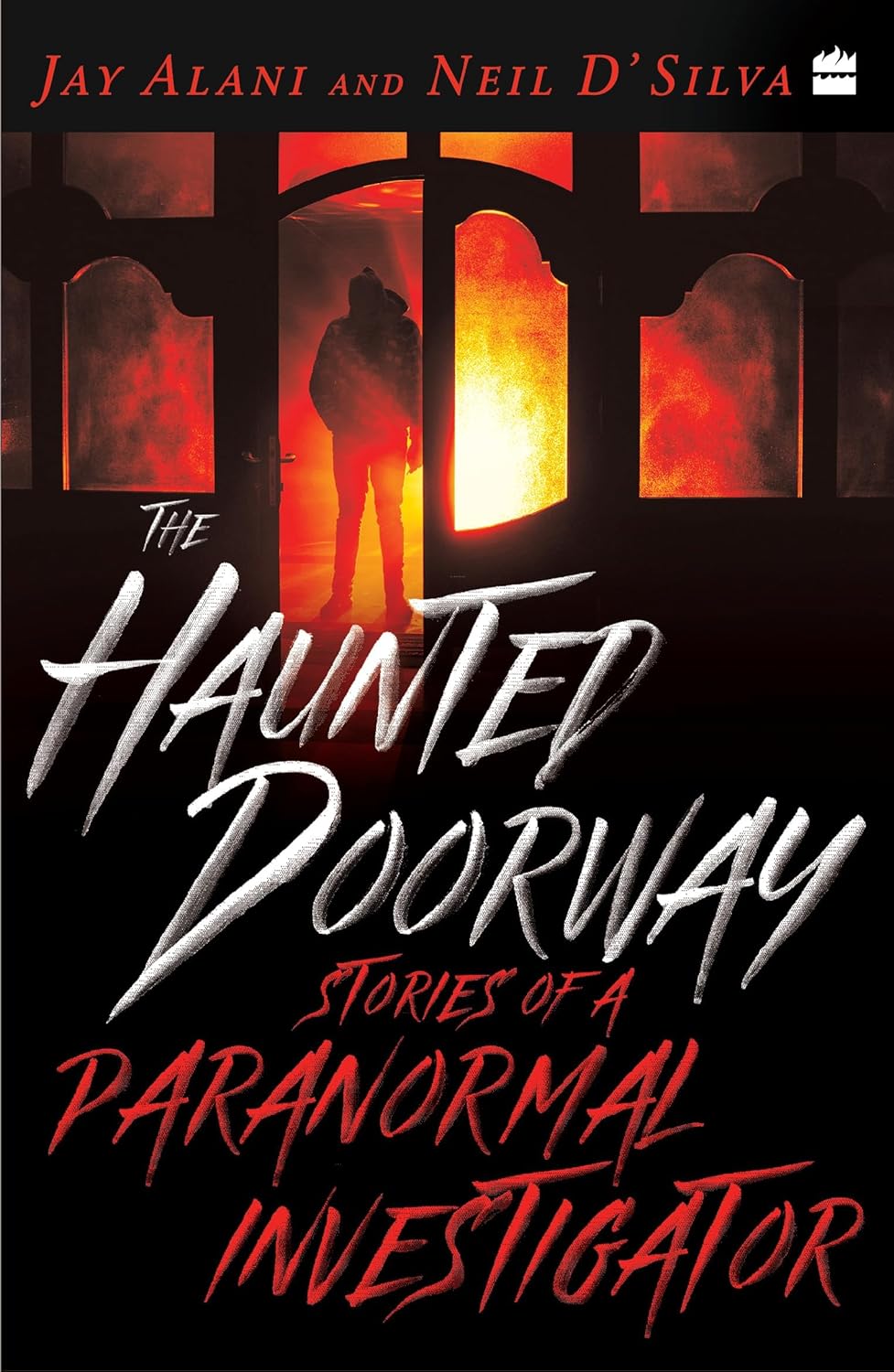
The Haunted Doorway works best when it stops trying to “prove” anything and simply tells a good story. Built around Jay Alani’s years as a paranormal investigator and shaped by Neil D’Silva’s storytelling, the book moves through a series of strange, often unsettling encounters—some clearly psychological, others harder to explain.
There’s a good mix here. A possessed object pushing someone to the edge, a woman convinced she’s being watched by something unseen, a mother dealing with forces she cannot control—these stories tap into familiar fears but give them a slightly different texture. What keeps them engaging is that the book doesn’t rush to label everything as supernatural. In several places, it quietly suggests that the human mind can be just as disturbing as any ghost.
D’Silva keeps the writing simple and readable, without overloading it with unnecessary detail. The tension builds steadily, and the stories don’t rely on cheap shocks. Instead, they leave behind a lingering discomfort, which works better for this kind of material. Alani’s background adds a layer of authenticity, even when the events themselves feel improbable.
The Indian setting adds to the mood. These aren’t generic haunted-house stories—they draw from local beliefs, social realities, and the everyday environments people recognize. At the same time, there’s a clear attempt to push back against blind faith and superstition, which gives the book a slightly sharper edge.
Not every story hits equally well. A few feel more like extended anecdotes than fully developed narratives. But the stronger ones make up for it, and the overall reading experience remains engaging.
This isn’t a book that tries to settle the debate between science and the supernatural. It sits somewhere in the middle and lets the reader decide. If you’re looking for horror that relies more on atmosphere and unease than outright scares, The Haunted Doorway is worth picking up.



 Bookshotsapp
Leave a comment