
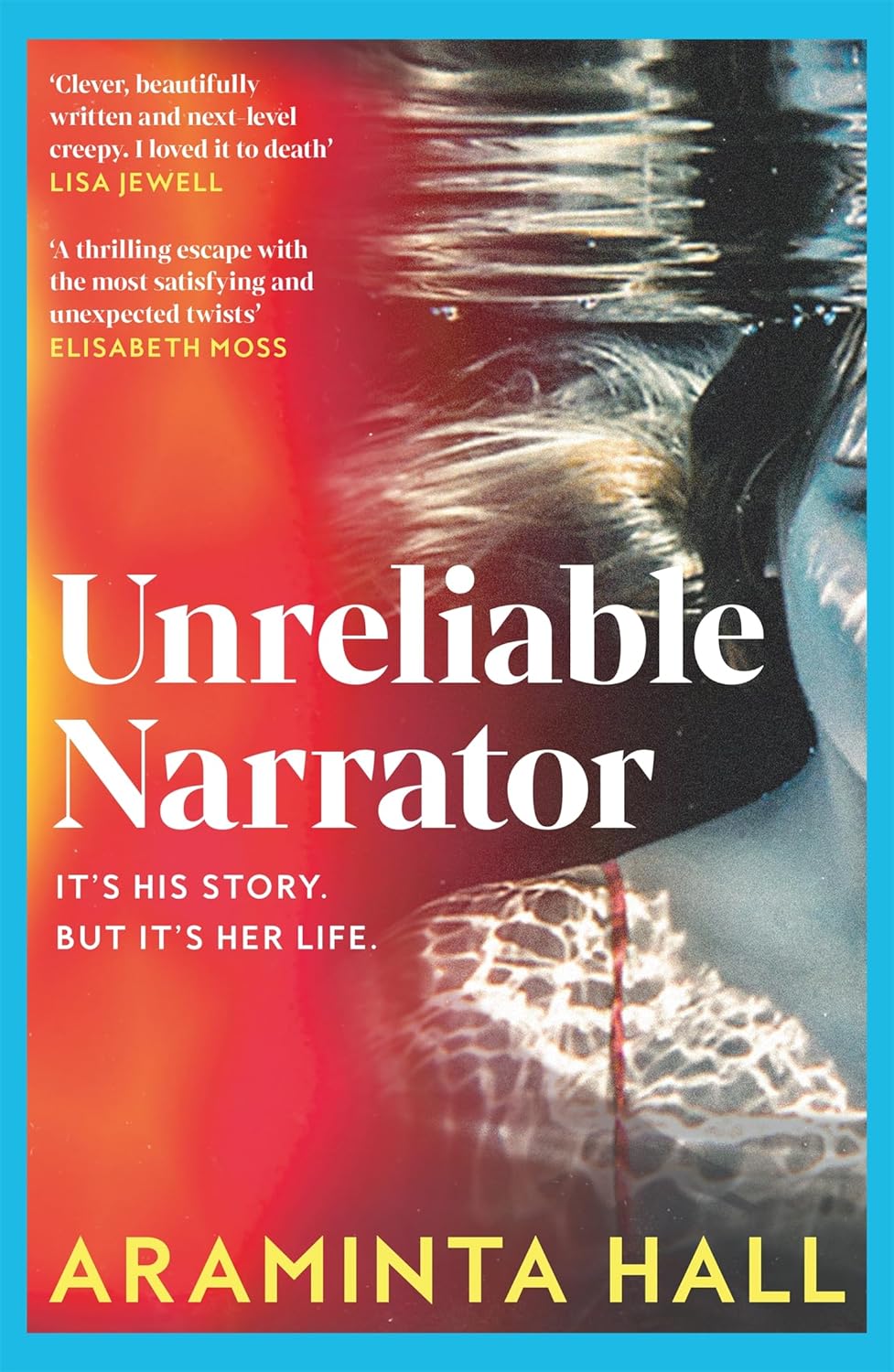
A chilling, intelligent thriller about power, perception and the stories we choose to believe…Unreliable Narrator is not your typical page-turner. It doesn’t rely on loud twists or dramatic shocks—instead, it unsettles you slowly, drawing you into a world where charm masks control, and truth slips quietly out of reach.
1
At its core is Hope Jenkins, a young woman who once stepped into what seemed like a dream: a job working for the magnetic and celebrated writer Ambrose Glencourt at his countryside home, Shadowlands. It’s the kind of place that feels almost mythical—art scattered across rooms, beauty in decay, and a sense that creativity hangs in the air. But beneath that aesthetic allure, something far more disturbing simmers.
The Unease Beneath the Beauty
Araminta Hall has a remarkable ability to make discomfort feel intimate. She doesn’t announce danger—she lets you notice it. A strange comment at dinner. A power imbalance that feels slightly off. A relationship dynamic that raises more questions than it answers. These details accumulate, creating a tension that is impossible to ignore.
The novel shifts between that fateful summer and a present-day timeline, where a very different Hope emerges—quieter, worn down, but holding onto something unresolved. The turning point comes when she reads Ambrose’s latest novel and recognises her own past within its pages—only to realise it has been reshaped into something unrecognisable.
Who Owns the Story?
In his version, Hope is no longer the victim—she is the villain. What follows is not just a personal reckoning, but a larger question about narrative control: who has the right to tell a story, and whose truth gets believed?
The dual narrative structure deepens this tension. Hope’s voice, preserved in her journals, feels immediate yet uncertain, while a present-day investigator attempts to piece together what really happened. The result is a constant push and pull, leaving readers suspended between conflicting versions of reality.
Power, Privilege and Silence
What gives the novel its edge is how sharply it reflects the real world. Without being overt, it explores how influence and status can shape perception, and how easily certain voices are dismissed or rewritten.
Ambrose is particularly compelling—charismatic, entitled and quietly unnerving. He embodies a kind of artistic authority that assumes everything, even people’s lives, can be used as material. In contrast, Hope’s journey is not about spectacle, but about reclaiming something far more fragile: her own voice.
A Story That Lingers
The pacing is measured, almost hypnotic. This is not a novel built on sudden shocks, but on slow realisation. Each layer peels back carefully, rewarding patient readers with an ending that feels both subtle and striking.
In the end, Unreliable Narrator is less about a single truth and more about the stories we construct—and who gets to control them. Thoughtful, eerie and deeply resonant, it leaves behind a quiet but persistent question: what if the version you believed was never the whole story?

 Bookshotsapp
Leave a comment