
Twenty-five years, millions in research funding, and some of the most advanced scientific tools ever created—and yet, consciousness continues to defy explanation.
In an age where artificial intelligence can simulate thought, neuroscientists can map the brain in real time, and psychedelics are re-entering clinical research, one fundamental question still resists clarity: why does it feel like something to be alive?
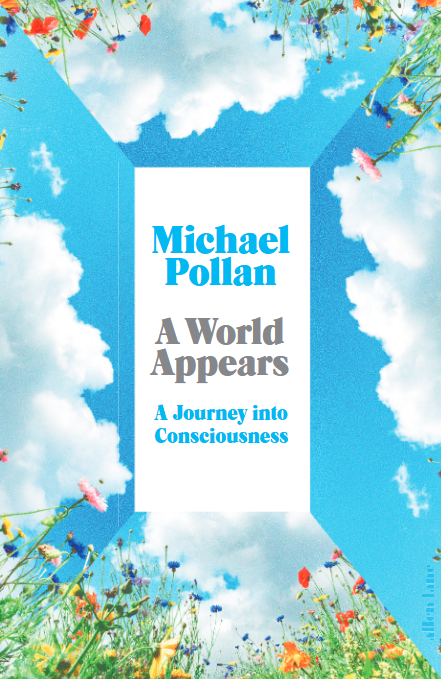
It is this enduring puzzle that internationally bestselling author Michael Pollan takes up in his latest book, A World Appears: A Journey Into Consciousness, announced by Penguin Random House India. The book is positioned as a sweeping, deeply researched exploration of one of science’s most persistent mysteries.
At the centre of Pollan’s narrative is a defining episode in modern consciousness studies—a wager between neuroscientist Christof Koch and philosopher David Chalmers. The bet, placed in 1998, asked whether science would be able to explain consciousness within twenty-five years. When the deadline arrived in 2023, the outcome was decisive: the philosopher won, underscoring how elusive the problem remains despite decades of work and billions spent.
Using this moment as a lens, Pollan moves beyond the confines of laboratory science into a broader, interdisciplinary investigation. The book brings together perspectives from neuroscientists, philosophers, artificial intelligence researchers, and even plant biologists, reflecting a field still grappling with its most basic assumptions.
From attempts to locate consciousness within neural circuits to theories suggesting it may extend beyond the brain, A World Appears captures a discipline marked by both rapid progress and deep uncertainty.
At once rigorous and accessible, the book raises urgent questions for a rapidly changing world: can intelligence exist without consciousness? Are we mistaking computation for awareness? And if consciousness cannot yet be explained, what does that imply for our understanding of reality itself?
Pollan structures his inquiry across four key dimensions—sentience, feeling, thought, and the self—tracing consciousness from its earliest emergence in living systems to the complex construction of human identity. Along the way, he engages with leading scientific frameworks such as Integrated Information Theory and Global Workspace Theory, highlighting competing approaches within the field.
The exploration also extends into less conventional territory, including the possibility of awareness in plants, the impact of psychedelic states on perception and identity, and ongoing attempts to simulate consciousness in artificial systems. A recurring theme is the growing view that the “self” may be a constructed, even illusory, phenomenon.
Rather than offering definitive answers, A World Appears reframes the debate, blending neuroscience, philosophy, and lived experience to reconsider what it means to be aware and to exist.
The book has already drawn early praise from major publications. The Financial Times calls it “a big, generous, illuminating inquiry into the essence of being alive,” while The Guardian describes it as “a mind-expanding exploration bridging science and the humanities.” Critics have also highlighted Pollan’s clarity and balance, with TLS noting his engaging style and the Sunday Times praising the work as “razor-sharp, sensitive and grounded.”
Pollan, an award-winning author and professor, is known for exploring the intersections of nature, culture, science, and human behaviour. His previous works, including The Omnivore’s Dilemma, In Defence of Food, and How to Change Your Mind, have shaped global conversations on food, health, and consciousness.
With A World Appears, he turns to perhaps the most profound question of all—one that, despite decades of inquiry, continues to resist even our best explanations.


 Bookshotsapp
Leave a comment