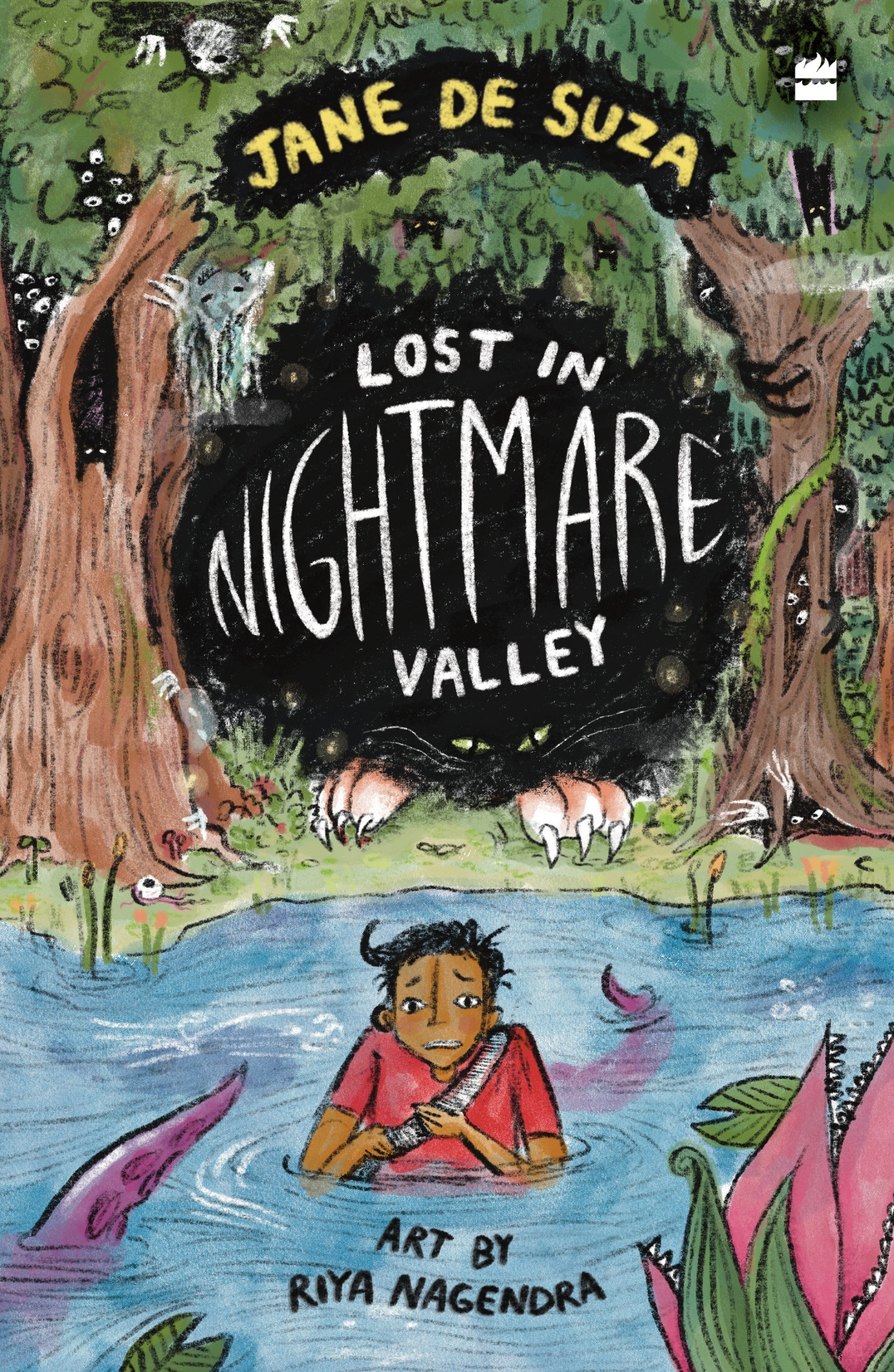
Jane De Suza’s Lost in Nightmare Valley promises an imaginative middle-grade adventure that blends spooky thrills with warmth, humour and emotional depth. Rather than treating childhood fears as something to dismiss, the novel embraces them with empathy, creating a story that acknowledges how real fears can feel to young minds while transforming them into an exciting, unforgettable adventure.
At the heart of the story is Roo, a young boy already struggling with feelings of frustration and displacement. Convinced that his baby sibling is responsible for turning his life upside down, he finds himself sent away for the summer, only to stumble into the mysterious Nightmare Valley after a series of unexpected events. What follows is a world where nothing behaves quite as expected. Monsters have fears of their own, kidnappers worry about nail polish, and strange creatures roam freely, giving the narrative a delightfully offbeat charm that balances its darker moments with comedy.
The novel appears to use fantasy not merely as spectacle but as a way of exploring emotions familiar to every child. Loneliness, jealousy, courage, belonging and the complexities of family relationships are woven into Roo’s extraordinary journey. By placing these very human feelings inside a bizarre and unpredictable landscape, the story encourages readers to confront fear rather than simply escape it.
One of the book’s greatest strengths is its distinctive tone. While Nightmare Valley is filled with eerie creatures and mysterious situations, the story never loses its sense of humour. Jane De Suza’s trademark wit ensures that frightening moments are softened with clever, playful twists, making the novel accessible to younger readers without diminishing its suspense. The result is a narrative that is spooky enough to excite but never overwhelming.
The supporting world is equally inventive. From friendships that are tested and repaired to unusual neighbours and upside-down villains who challenge conventional ideas of good and evil, the story creates a setting that feels imaginative yet emotionally grounded. Readers are likely to recognise pieces of their own everyday lives hidden beneath the fantastical surface, making Roo’s journey both relatable and engaging.
Riya Nagendra’s illustrations are described as a perfect complement to De Suza’s storytelling, helping bring Nightmare Valley vividly to life. Together, the words and artwork promise an immersive reading experience that captures both the whimsy and mystery of Roo’s adventure.
Jane De Suza’s own reflections on the novel offer valuable insight into its emotional core. She reminds readers that while adults may dismiss ghosts and monsters as imaginary, children’s fears are deeply real. Lost in Nightmare Valley builds on this idea, presenting fear not as something to be mocked or ignored but as an experience that can be understood, faced and ultimately overcome.
The comparison with Coraline reflects the novel’s blend of fantasy, suspense and emotional storytelling, while its emphasis on friendship, family and self-discovery gives it a heart that extends beyond its spooky premise. It is a story that invites readers to laugh, shiver and cheer alongside Roo as he searches not only for a way home but also for the courage within himself.
Filled with humour, imagination and heartfelt emotion, Lost in Nightmare Valley appears to be an engaging middle-grade adventure that celebrates resilience, friendship and the importance of confronting one’s fears. It is the kind of story that entertains while gently reminding young readers that even the darkest nightmares can be faced with courage, kindness and hope.
