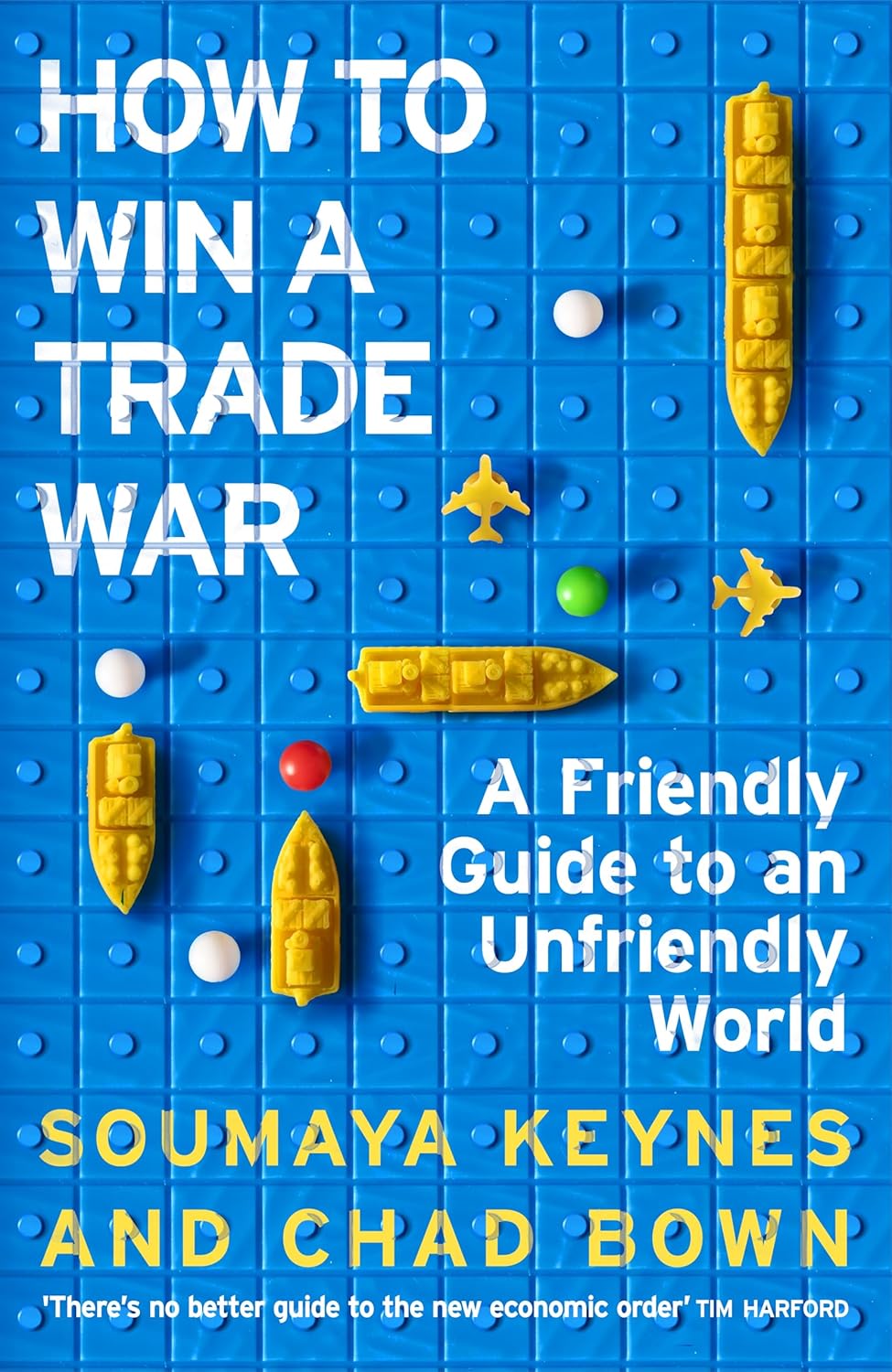
There was a time when global trade rarely entered everyday conversation. Goods moved across continents, supply chains quietly did their job and most people hardly gave a second thought to where products came from or how they arrived. That world, as Soumaya Keynes and Chad Bown argue in How to Win a Trade War, no longer exists.
Today, trade has become a source of political battles, economic uncertainty and strategic competition. A tariff announcement can rattle stock markets, a disruption in energy supplies can push up household expenses and restrictions on semiconductor exports can influence the future of artificial intelligence. Trade is no longer a niche topic for economists; it has become a force that touches almost every aspect of modern life.
What makes this book stand out is its ability to explain an immensely complicated subject without making readers feel like they are sitting through an economics lecture. Keynes, a columnist at the Financial Times, and Bown, a respected economist and former adviser to the US State Department, draw upon their expertise to create a book that is informative without being intimidating.
Instead of relying on dense theory, they focus on stories, real-world examples and clear explanations that help readers understand why trade matters now more than ever.
The book arrives at a particularly significant moment. Over the past decade, globalisation has undergone a dramatic transformation. The optimism that once surrounded open markets has given way to growing anxieties about economic dependence, national security and technological competition.
Countries are increasingly treating trade as a strategic weapon rather than simply an economic activity.
The authors explore these developments with remarkable clarity. They examine the consequences of Brexit, the impact of Donald Trump’s tariff policies, China’s expanding economic influence and the growing race to control advanced technologies. Yet they never lose sight of the bigger picture: the world is entering a new phase in which economics and geopolitics are deeply interconnected.
One of the book’s most compelling arguments is that trade disputes are no longer about who sells more products to whom. They are increasingly about power.
Control over critical resources, manufacturing networks and cutting-edge technologies has become central to national ambitions. The struggle over semiconductor chips, for instance, is presented not merely as a business issue but as a contest that could determine future leadership in areas such as artificial intelligence and advanced industries.
The authors also do an excellent job of illustrating how these global developments affect ordinary people. What may appear to be distant policy decisions can have immediate consequences for jobs, savings, inflation and the cost of living.
This grounding in everyday realities gives the book a sense of urgency.
Another notable strength is its balanced perspective. Keynes and Bown avoid simplistic narratives that divide countries into winners and losers. Instead, they encourage readers to understand the competing interests at play and the difficult choices governments face as they try to protect their economies without isolating themselves from the rest of the world.
The book does not pretend that there are easy solutions.
Its questions are often more important than its answers. What happens when economic competition intensifies? Can countries secure their own interests without damaging international cooperation? And could trade conflicts eventually spill over into broader geopolitical confrontations?
These are unsettling questions, but the authors argue that they can no longer be ignored.
What makes How to Win a Trade War particularly enjoyable is its tone. Despite dealing with subjects such as tariffs, supply chains and economic strategy, the writing remains lively and engaging. There is humour throughout, and the authors know how to translate complex ideas into language that feels accessible without sacrificing depth.
By the end, readers may find themselves looking at everyday objects differently. A smartphone, an electric vehicle or even a supermarket shelf becomes a reminder of how interconnected and fragile the global economy has become.
This is ultimately a book about much more than trade. It is about understanding the forces that are reshaping the world order and recognising why decisions made thousands of kilometres away can have profound consequences at home.
At a time when economic tensions are influencing everything from technology to diplomacy, How to Win a Trade War serves as an indispensable guide to a rapidly changing world.
