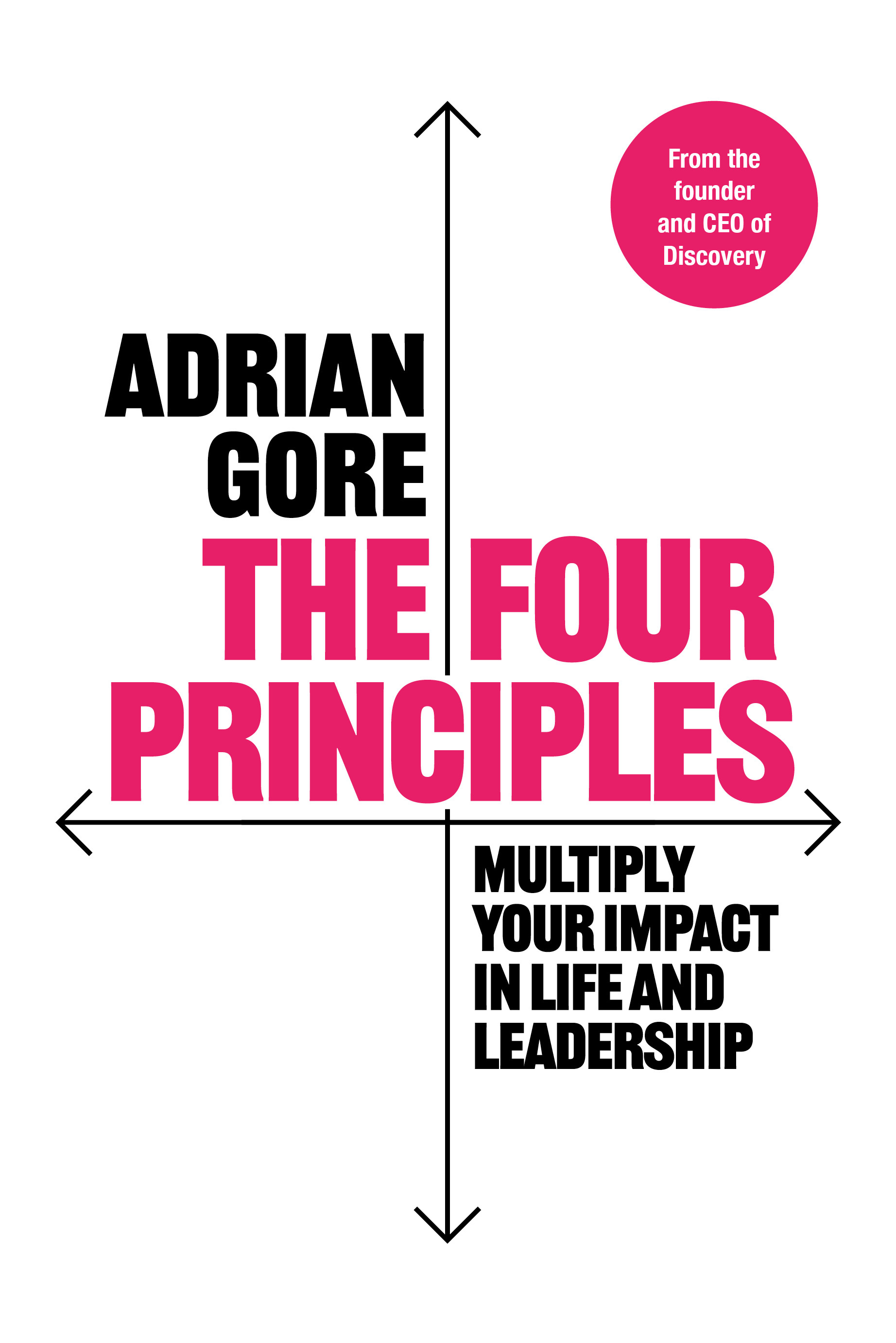
What separates those who create lasting impact from those with equal talent who never quite fulfil their potential? In The Four Principles, entrepreneur and Discovery Group founder Adrian Gore attempts to answer that question with a framework that blends behavioural science, leadership philosophy and decades of business experience.
Rather than presenting success as the product of exceptional intelligence or innate ability, Gore makes a compelling case that the difference lies in a handful of learnable principles that shape how people think, make decisions and respond to opportunity. The result is a thoughtful leadership book that challenges conventional assumptions while offering a practical roadmap for personal and professional growth.
Drawing on his journey of building Discovery from a single entrepreneurial idea into a global financial services group serving more than 50 million customers across 37 countries, Gore reflects on the mindset that enabled him to create the pioneering Shared-Value business model. Recognised internationally and taught as a case study at Harvard Business School, the model forms the backdrop to many of the lessons explored throughout the book, demonstrating how bold thinking can reshape industries rather than simply compete within them.
At the centre of the book are four interconnected principles that Gore believes have a powerful multiplier effect on life and leadership.
The first, Disciplined Optimism, argues that optimism is not wishful thinking but a rational strategy for recognising opportunities that others overlook. In Gore’s view, leaders who consistently create impact are those who remain hopeful while grounding their decisions in evidence and disciplined execution.
Equally compelling is Focused Urgency, which challenges the common belief that there will always be more time to act. Gore encourages readers to adopt a heightened awareness of time, suggesting that meaningful impact often depends on acting decisively before opportunities disappear.
The principle of Declared Goals highlights the transformative power of publicly committing to ambitious objectives. Rather than treating goals as private aspirations, Gore argues that clearly articulated ambitions create accountability, sharpen focus and inspire sustained action.
Perhaps the most thought-provoking concept is The Pareto Tail, where Gore expands on the familiar Pareto Principle by arguing that a relatively small number of high-impact decisions ultimately determine the direction of a career, business or life. Identifying and acting on these pivotal choices, he suggests, produces results far beyond what constant activity alone can achieve.
What distinguishes The Four Principles from many books in the leadership genre is its balance between theory and application. Gore supports his ideas with scientific reasoning while illustrating them through practical examples drawn from entrepreneurship and organisational leadership. The writing remains clear and accessible, avoiding management jargon in favour of straightforward explanations that encourage readers to question long-held assumptions about success.
The book also reflects Gore’s experience of building an innovative company during a period of profound political and social uncertainty in South Africa. That context lends additional credibility to his emphasis on resilience, long-term thinking and the courage to pursue unconventional ideas despite external challenges.
Ultimately, The Four Principles is not simply about becoming a better leader or building a successful business. It is about developing a way of thinking that enables people to make better decisions, recognise overlooked opportunities and maximise the impact of their abilities.
Insightful, evidence-based and quietly persuasive, Adrian Gore’s The Four Principles offers a refreshing perspective on leadership and achievement. It is a valuable read for entrepreneurs, executives, professionals and anyone seeking to understand why some individuals consistently create extraordinary results—not because they possess greater talent, but because they have learned how to use it more effectively.
