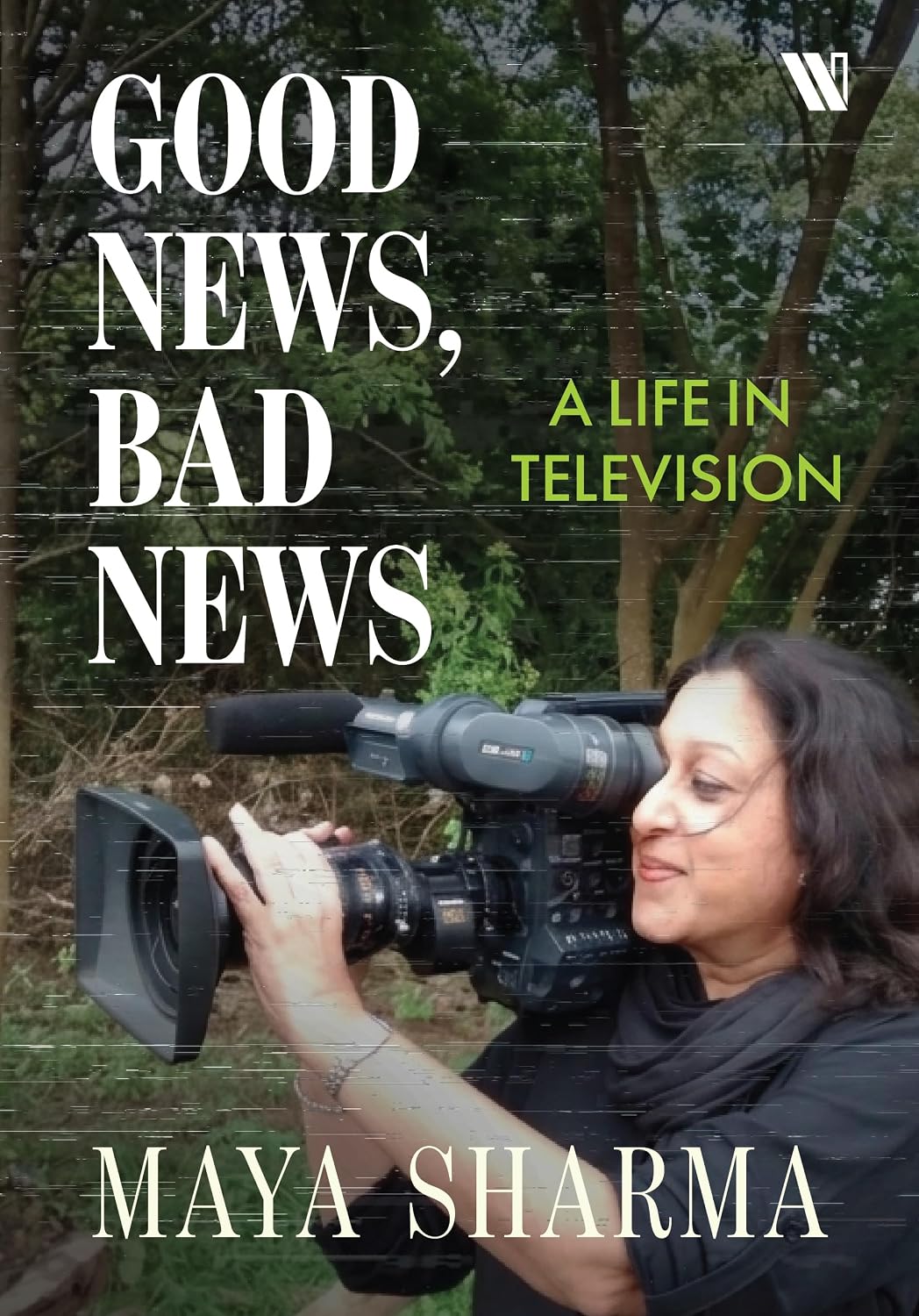
An insider’s account of how television journalism found its voice—and gradually lost its way.
There are few journalists whose careers mirror the evolution of an entire industry. In Good News, Bad News, veteran television journalist Maya Sharma turns three decades of reporting into a compelling memoir that is as much about her own journey as it is about the story of television news in India.
Beginning with India’s first televised election results in 1989, Sharma recalls the excitement of stepping in front of the camera for her first live broadcast—a moment that would mark the beginning of thousands more. From election campaigns and political upheavals to natural disasters, crime, sports, arts and human-interest stories, her career unfolded alongside the rapid transformation of Indian television journalism.
What makes Good News, Bad News stand apart from the many media memoirs published in recent years is its perspective. Sharma writes not from the power corridors of Delhi but from the vantage point of NDTV’s Bengaluru bureau, offering readers a refreshing look at journalism beyond the national capital. Her experiences reveal the realities of being a bureau reporter—where versatility is not a choice but a necessity, and every assignment demands fresh curiosity, resilience and adaptability.
The memoir is at its strongest when Sharma reflects on the profession itself. She candidly examines the widening gap between editorial values and commercial pressures, the relentless race for ratings, the challenges faced by women journalists in the field, and the often-overlooked regional divides within Indian newsrooms. These observations are delivered without bitterness or sensationalism; instead, they emerge from years of careful observation and lived experience.
Sharma’s writing is measured, lucid and quietly evocative. Rather than romanticising the past or condemning the present, she allows readers to witness the gradual shift in television news—from a medium driven by public service and reportage to one increasingly shaped by spectacle and competition. The result is a nuanced narrative that invites reflection rather than judgment.
For readers interested in journalism, media studies or contemporary Indian history, Good News, Bad News offers valuable firsthand insights into the making of television news. Yet the book also succeeds as a deeply personal memoir, capturing the pressures, unpredictability and emotional demands of life in the newsroom while celebrating the enduring importance of honest reporting.
Maya Sharma, a member of India’s first generation of professionally trained television journalists, brings both authority and humility to her storytelling. Her distinguished career—as a reporter, anchor, documentary filmmaker, Fulbright Scholar and recipient of the Karnataka Rajyotsava Award—lends authenticity to every page without ever overshadowing the human stories at its heart.
Good News, Bad News is ultimately more than the memoir of a journalist. It is a chronicle of an industry that reshaped how India consumed news, and a thoughtful meditation on what journalism has gained—and what it has lost—along the way. Honest, insightful and deeply relevant, it is an essential read for anyone seeking to understand the changing face of Indian television news.
