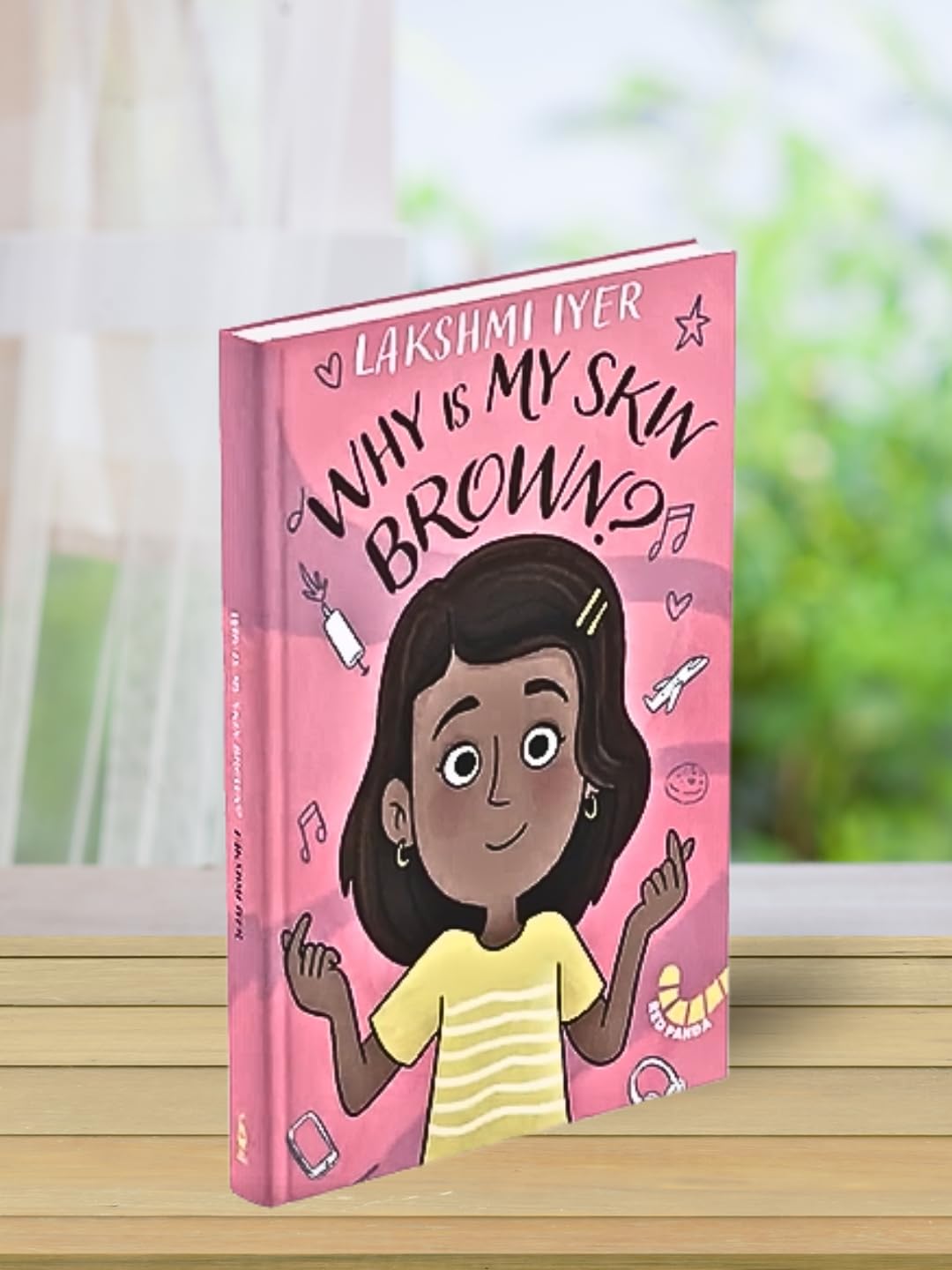
There are children’s books about racism. There are children’s books about identity. And then there are the rare stories that illuminate the quiet prejudices children experience within their own communities. Why Is My Skin Brown? is one of those rare books.
Lakshmi Iyer’s companion novel to Why Is My Hair Curly? follows twelve-year-old Sarayu, an Indian American girl who has spent years feeling “too brown” in suburban Pennsylvania, only to arrive in Bengaluru and discover that she is still somehow the “wrong” kind of brown. Instead of finding uncomplicated belonging, she encounters colorism, beauty standards, and family expectations that are as confusing as the prejudice she left behind.
What makes this novel exceptional is its emotional honesty. Iyer refuses easy answers or simplistic villains. Sarayu’s grandmother’s comments, her aunt’s nightly turmeric face packs, and the casual conversations about fair skin emerge not from cruelty alone but from generations of inherited beliefs. The novel treats these realities with remarkable empathy while never minimizing the hurt they cause.
Sarayu is an instantly relatable protagonist. Intelligent, observant, and quietly funny, she navigates unfamiliar classrooms, cousins who seem far more worldly than she is, long-distance conversations with her father, and the complicated experience of existing between two cultures. Her journey captures the emotional landscape of many third-culture children who discover that “going back home” is often more complicated than anyone imagines.
The story also feels strikingly contemporary. Alongside questions of identity and family, Iyer thoughtfully incorporates social media, online safety, digital trust, and the pressures young adolescents face online. These themes are woven naturally into the narrative rather than presented as lessons, giving readers meaningful opportunities to reflect without feeling lectured.
One of the novel’s greatest strengths is its nuanced portrayal of family. Mothers, daughters, grandmothers, cousins, and aunties all carry different relationships with skin colour, beauty, and belonging. Rather than presenting one generation as enlightened and another as backward, Iyer shows how insecurities and prejudices are inherited—and how they can also be interrupted with love, honesty, and courage.

The writing itself is warm, accessible, and emotionally resonant, perfectly calibrated for readers aged ten to thirteen. Difficult subjects such as colorism, self-esteem, and cultural identity are handled with sensitivity, making the book equally valuable for independent readers, classroom discussions, and family reading. Adults will recognize the deeper emotional currents beneath Sarayu’s story, while younger readers will simply experience the relief of seeing someone who shares questions they may never have voiced aloud.
More than a novel about skin colour, Why Is My Skin Brown? is a story about belonging without surrendering oneself. It reminds young readers that fitting in is not the only measure of happiness, and that self-acceptance often begins when we stop measuring ourselves against other people’s expectations.
Thoughtful, compassionate, and deeply relevant, Why Is My Skin Brown? is an important addition to contemporary middle-grade literature. It speaks directly to Indian American children while offering universal insights into identity, family, friendship, and growing up between worlds. In an age when conversations about representation often focus on how children are seen by others, Lakshmi Iyer turns the lens inward, asking an even more profound question: how do children learn to see themselves?
A beautifully written, emotionally intelligent novel that deserves a place in every school library, every multicultural bookshelf, and every family looking for stories that celebrate identity with honesty, warmth, and hope.
About the Author
Lakshmi G. Iyer is a novelist, essayist, and children’s book author writing at the intersection of inheritance, motherhood, and the South Asian diaspora. She is the author of The Smudged Hyphen, Hindsight, A Star Keeps Its Distance, Why Is My Hair Curly?, and Why Is My Skin Brown?. She lives in Pennsylvania.
