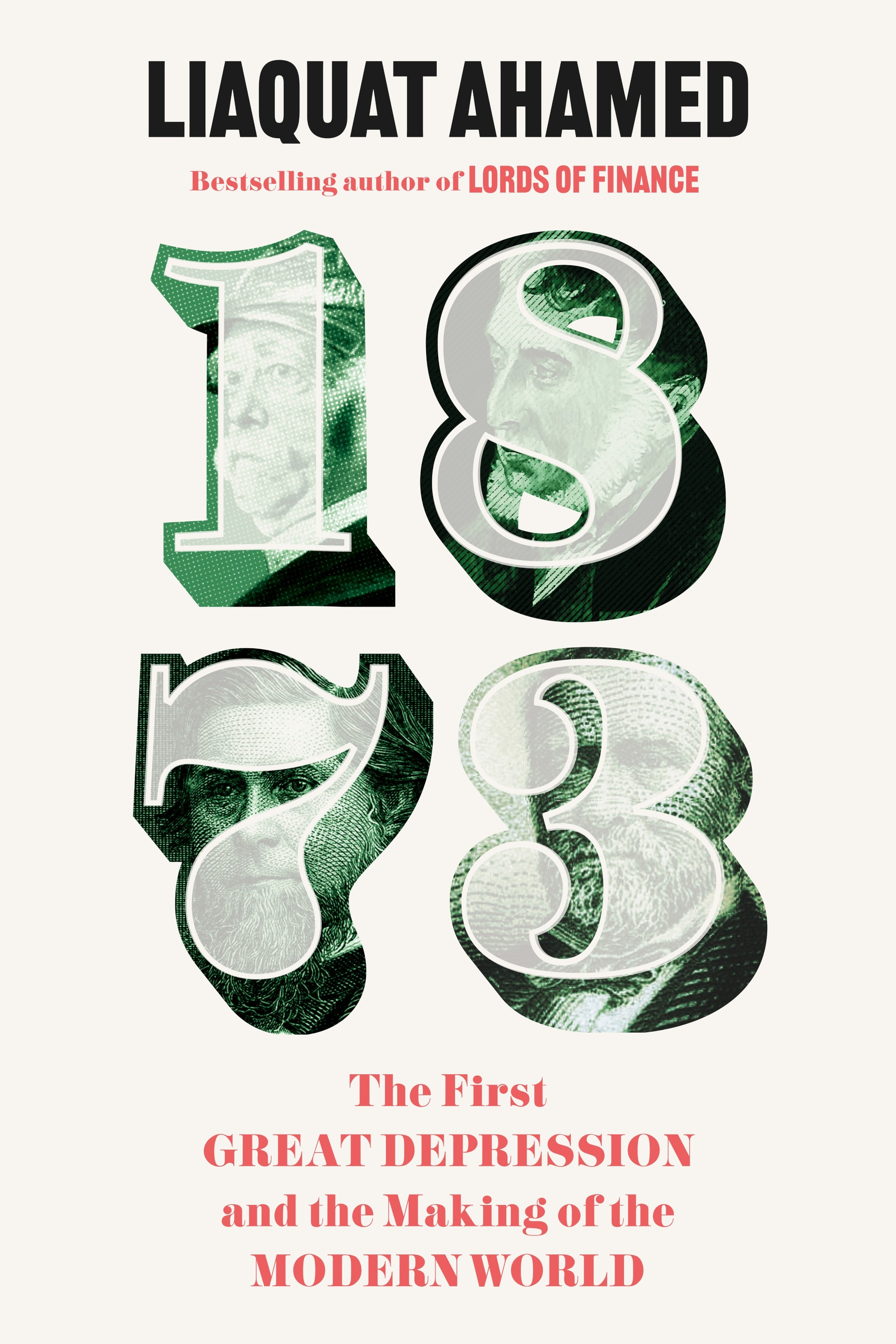
What happens when a financial crisis stops being a financial story?
That is the question at the heart of Liaquat Ahamed’s 1873, a sweeping account of a moment when markets, politics and society collided—and when the growing interconnectedness of the global economy meant that a shock in one part of the world could quickly reverberate across continents.
A Pulitzer Prize-winning historian and economist, Ahamed, best known for Lords of Finance: The Bankers Who Broke the World, turns his attention to a crisis that is less familiar than the Great Depression or the financial crash of 2008, but whose consequences were remarkably far-reaching. His subject is the panic that began with the collapse of the Vienna Stock Exchange on 9 May 1873 and eventually reached Wall Street, setting off what became one of the first truly global financial crises.
The significance of 1873 lies in the way Ahamed looks beyond the crash itself. The book is not simply a reconstruction of a market collapse; it is an exploration of what happens when financial optimism, easy capital and rapid economic expansion run ahead of reality.
The roots of the crisis lay in the investment boom of the mid-nineteenth century. Confidence was high, capital was flowing and opportunities seemed almost limitless. Speculation flourished as investors, financiers and industrialists embraced the possibilities of a rapidly expanding economy. But the same forces that fuelled the boom also created vulnerabilities. When confidence broke, the consequences travelled far beyond the trading floor.
Ahamed brings this period to life through the people who shaped, witnessed and were caught up in it. The Rothschild banking dynasty sits prominently within the story, alongside financiers, politicians, industrialists and speculators. Figures such as Jay Gould, Mark Twain and Karl Marx add different perspectives to an era marked by extraordinary economic ambition and profound social and political uncertainty.
This human dimension gives the history much of its appeal. Financial crises can easily become stories of numbers, markets and institutions. Ahamed instead shows that behind every financial upheaval are people making decisions, taking risks, responding to fear and trying to understand a world that is changing faster than they expected.
But perhaps the most compelling aspect of 1873 is its examination of what followed the panic.
Ahamed shows that the aftermath of a financial crisis can be more consequential than the crash itself. The economic difficulties that followed helped usher in a prolonged period of deflation and weakened faith in free trade. The effects extended into American politics, including the course of Reconstruction, while European financial and political influence expanded over the Ottoman Empire. Across Europe, economic and political discontent also contributed to the growth of populist and antisemitic movements.
In this telling, economics is never isolated from politics or society. A decision taken by a banker, an investor or a government can eventually influence public sentiment, political alliances and the direction of entire nations.
That makes 1873 particularly resonant today.
The world of 1873 was very different from the one we inhabit now, yet some of the questions feel strikingly familiar. What happens when markets become excessively confident? What are the dangers of easy capital and speculation? How does economic uncertainty influence politics? And when economies become deeply connected, can a crisis ever truly remain local?
Ahamed does not need to force comparisons with the present to make the past feel relevant. The parallels emerge naturally from the story itself. Inflation, debt, trade tensions, global interdependence and economic uncertainty remain part of contemporary economic debates. The history of 1873 offers a reminder that financial shocks can have consequences that stretch well beyond markets and far beyond the moment in which they begin.
The book’s larger contribution is its portrayal of the nineteenth century as a formative period for the modern global economy. The networks of finance, trade and political influence that were taking shape created opportunities for extraordinary growth, but also exposed countries and societies to risks they were still learning to understand.
Ahamed captures that tension between optimism and fragility particularly well. The story begins in an atmosphere of expansion and possibility, but gradually reveals how confidence can obscure risk. What appears to be unstoppable progress can contain the seeds of instability.
For readers interested in economics, history, politics or the evolution of globalisation, 1873 offers a fascinating window into a pivotal period. It also demonstrates why financial history matters: crises do not simply destroy wealth. They can alter political thinking, reshape institutions, influence social movements and leave consequences that endure for generations.
Ultimately, 1873 is a history of a financial crash, but its real subject is much larger—the unpredictable relationship between money, power and society. By tracing the shockwaves of a crisis that began more than 150 years ago, Liaquat Ahamed shows how closely economic decisions are tied to the political and social direction of the world.
The past, in 1873, does not feel distant. It feels like a warning—and a remarkably relevant one.
