What happens when a society is confronted by something it cannot explain? Does it turn to faith, science, superstition—or simply to fear?
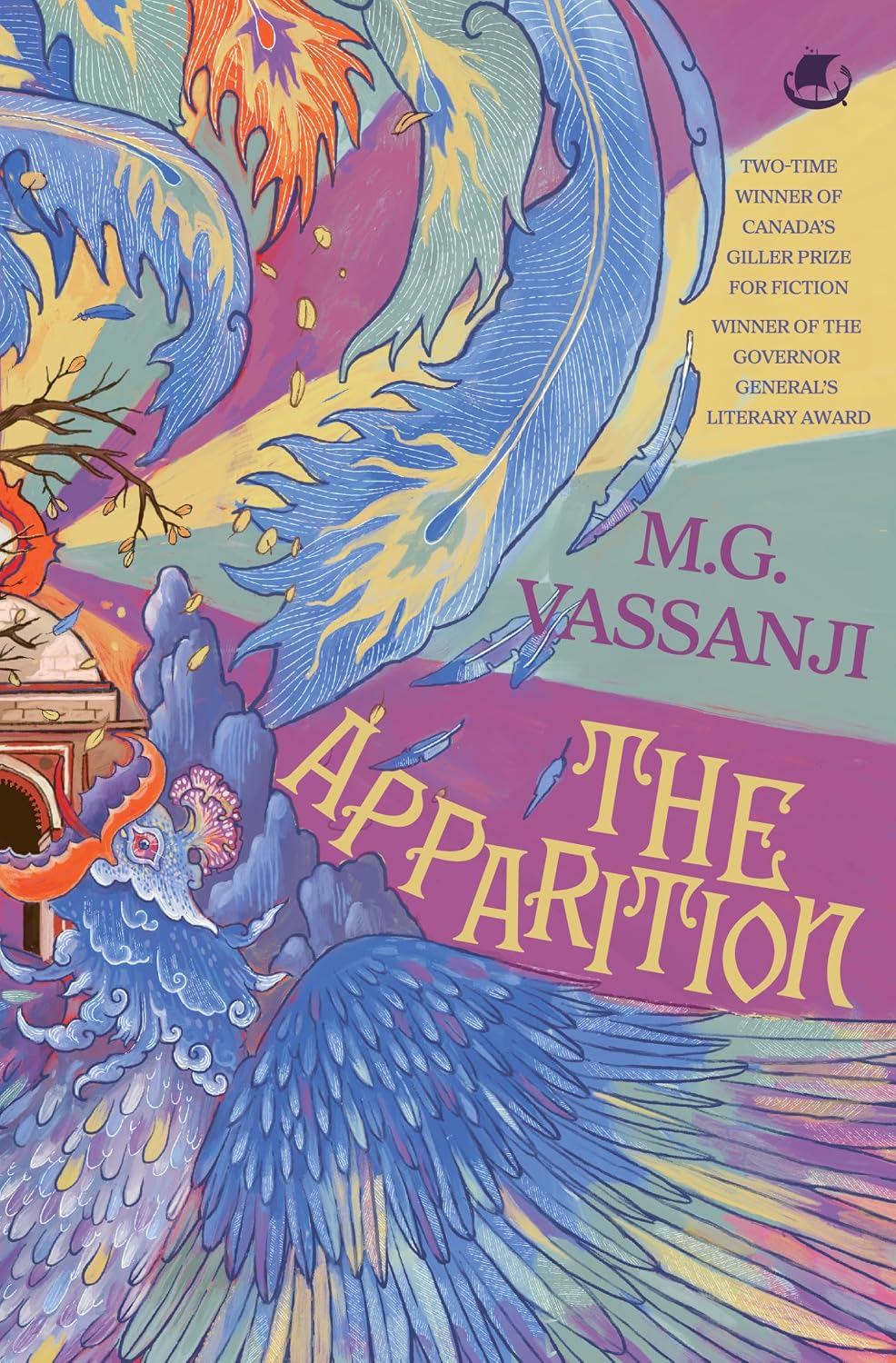
M.G. Vassanji’s latest novel, The Apparition, begins with precisely such a moment. Set in 13th-century Delhi during the declining years of Sultan Alauddin Khilji’s rule, the novel brings together history, fantasy and political allegory to examine questions that remain strikingly contemporary: who controls power, how societies respond to uncertainty, and how easily truth can be reshaped by those who rule.
A two-time Giller Prize winner and recipient of the Governor General’s Literary Award, Vassanji enters a medieval world already under immense strain. Delhi is portrayed as a city nearing collapse, troubled by famine, political manoeuvring, external threats and an increasingly fragile Sultanate.
Into this unsettled landscape appears a mysterious figure in the sky—something resembling a man and a bird, with an appearance so unusual that nobody can agree on what it represents.
That uncertainty becomes the novel’s central engine.
Different characters interpret the apparition through their own intellectual and religious frameworks. For some, it is a divine warning; for others, an illusion or a scientific phenomenon. Some see it through Hindu cosmology, while religious scholars regard it as an ominous presence. The same phenomenon therefore produces multiple truths, depending on who is looking at it.
Vassanji uses this conflict of interpretations to explore one of the oldest human instincts: the need to give meaning to what we do not understand.
At the heart of the story is Amir Hassan al Shirazi, a poet, thinker and court historian caught between competing worlds. His journey through Delhi brings him into contact with people from different faiths, communities and intellectual traditions. Hindus, Muslims, Mongols, Christians, Sufis, scientists and others populate his world, creating a portrait of a society that is diverse but increasingly fractured.
Amir himself embodies that complexity. His family history connects him to different cultures and identities, particularly through his father Teymurdai’s links with the Mongol military and his mother Zarine’s past. His personal story consequently becomes part of the novel’s larger examination of exile, identity and belonging.
The historical backdrop is equally significant. References to the Mongol invasions, Halaku Khan, Alamut and the Baatinis widen the novel’s canvas, placing the immediate crisis in the context of a much larger struggle over civilisation, authority and survival.
But The Apparition gradually moves beyond historical fiction.
The arrival of the mysterious Avians changes the direction of the narrative. At first, they appear to provide an answer to a society exhausted by violence and disorder. Their presence carries the promise of a new beginning—a way out of the chaos that has consumed Delhi.
Yet Vassanji does not allow this apparent salvation to remain uncomplicated.
What initially looks like an ideal solution begins to resemble another form of control. The promise of order gradually raises uncomfortable questions about freedom, conformity and the price societies may be willing to pay for security.
This is where the novel’s political dimension becomes particularly sharp.
One of its most powerful ideas emerges through the treatment of Amir Hassan’s historical record, Tarikh Alau. His account is altered and manipulated, illustrating how political authority can interfere with collective memory. The novel suggests that history is not always a record of what happened; in the hands of power, it can become an instrument for deciding what people are allowed to remember.
That idea gives The Apparition a distinctly modern resonance.
Vassanji’s medieval Delhi may be centuries removed from the present, but the anxieties that run through it—fear, misinformation, political manipulation, religious interpretation and the struggle over truth—remain familiar.
The novel’s language adds another layer to the experience. Vassanji moves between historical detail, philosophical questioning, conversations and Amir’s personal reflections, allowing the narrative to shift naturally between the public crisis of Delhi and the private turmoil of its central character.
Ultimately, Amir’s story becomes a search for a place where identity is not dictated by power or circumstance. His experiences raise questions about whether homeland is a geographical location, a memory or an idea carried within oneself. The emotional force of the ending, particularly the image of his son moving towards Delhi, brings that question of belonging into sharp focus.
The Apparition is therefore much more than a story about a strange presence appearing in the sky.
The apparition is a metaphor for the unknown and for humanity’s instinctive response to uncertainty. The Avians represent the attraction of an apparently perfect solution to a deeply troubled society. And their transformation from possible saviours into instruments of control becomes a warning about the dangers of surrendering freedom in exchange for certainty.
Vassanji’s greatest achievement lies in making the medieval world speak to the present without turning the novel into a straightforward political statement. Instead, he allows history, imagination and allegory to intersect.
The result is a thoughtful and unsettling novel about the ways societies confront fear, construct belief and remember—or rewrite—their past.
The Delhi of The Apparition may belong to another age. But its central dilemma remains remarkably current: when the world becomes uncertain, how much freedom are we willing to give up in our search for answers?
