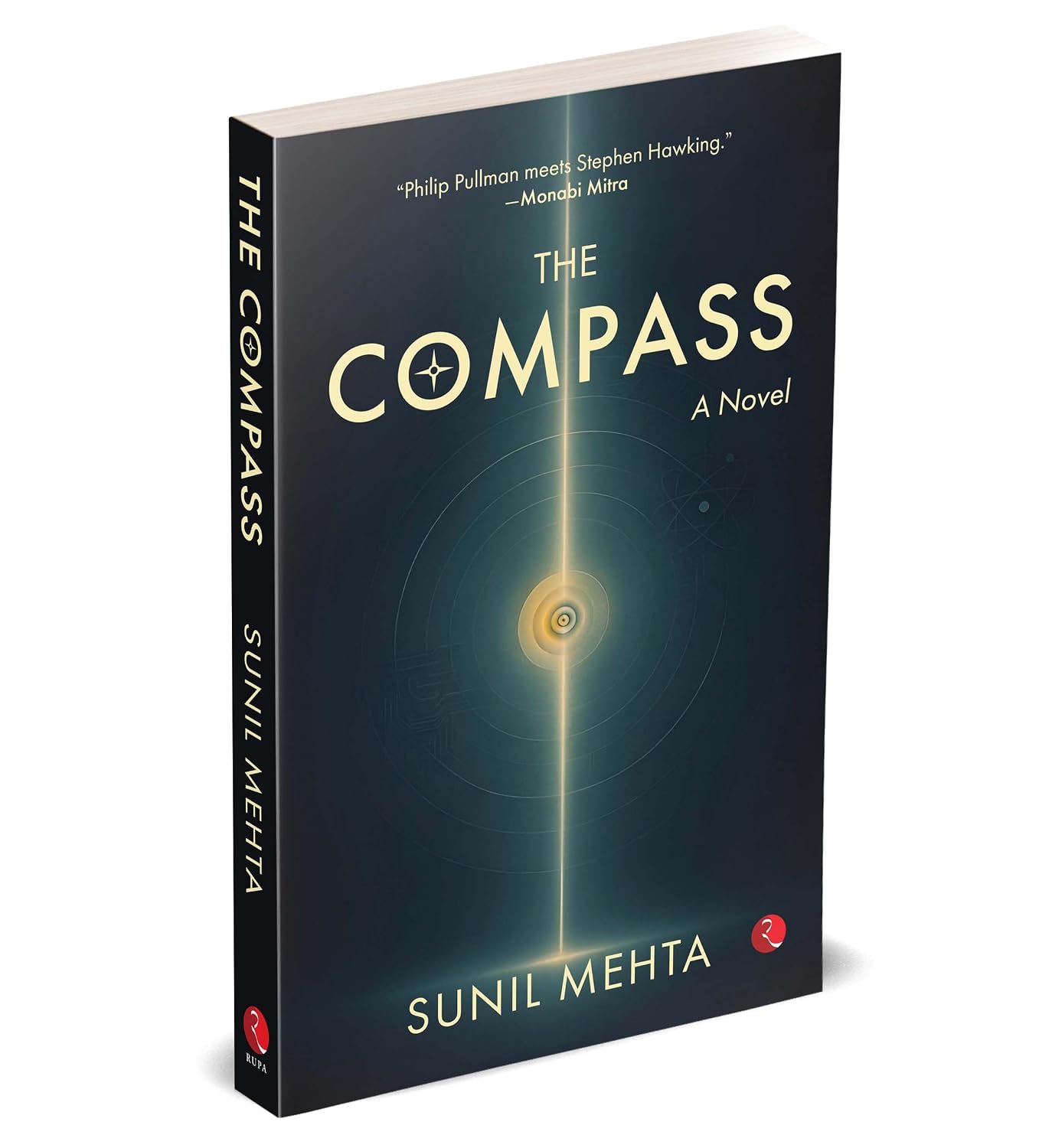
What if the key to changing the future lay in understanding the minds that shaped the past? Sunil Mehta’s The Compass explores this intriguing possibility through an imaginative adventure that brings together time travel, scientific discovery and the power of human curiosity.
The story begins when four curious high school students discover a glowing compass buried in a garden near their school. With the guidance of their enigmatic professor, they unlock its extraordinary ability to travel through time—not physically, but through the minds of some of history’s most influential innovators.
Their journeys take them into the worlds of Albert Einstein, Robert Noyce and Steve Jobs. From Einstein’s exploration of light and relativity to Noyce’s role in laying the foundations of Silicon Valley and Jobs’s transformation of technology through iconic products, the novel offers young readers an imaginative way to engage with the people behind some of the defining ideas of the modern age.
But The Compass is not simply a journey through scientific breakthroughs and technological milestones. At its heart lies a deeper exploration of the choices, uncertainties and human qualities that make innovation possible. Each encounter reveals how imagination, intuition, courage and conscience can shape the course of discovery—and how even extraordinary minds must navigate moments of doubt and difficult decisions.
As the students move from one visionary to another, their adventure gradually becomes a journey of self-discovery. They begin to question whether brilliance alone is enough to change the world, or whether meaningful progress also demands empathy, responsibility and the courage to challenge accepted ideas.
This gives the novel an engaging coming-of-age dimension. The compass becomes more than a device for exploring the past; it serves as a reminder that the future is shaped by people willing to imagine possibilities beyond what already exists. The prospect that one of the students might someday be chosen by the compass adds an element of anticipation to their quest.
Mehta’s premise offers an accessible meeting point between history, science and storytelling. By placing young protagonists at the centre of encounters with celebrated innovators, the novel invites readers to look beyond familiar achievements and consider the human decisions that made them possible.
At 608 pages, The Compass offers an expansive adventure for readers who enjoy stories that combine intellectual curiosity with imaginative possibilities. Its central questions—what makes someone an innovator, how ideas become reality, and what responsibilities accompany the power to change the world—give the narrative relevance beyond its time-travelling premise.
An imaginative adventure that brings the worlds of science, technology and history together, The Compass encourages young readers to think boldly, question convention and recognise that tomorrow’s breakthroughs may begin with the curiosity of an ordinary student.
