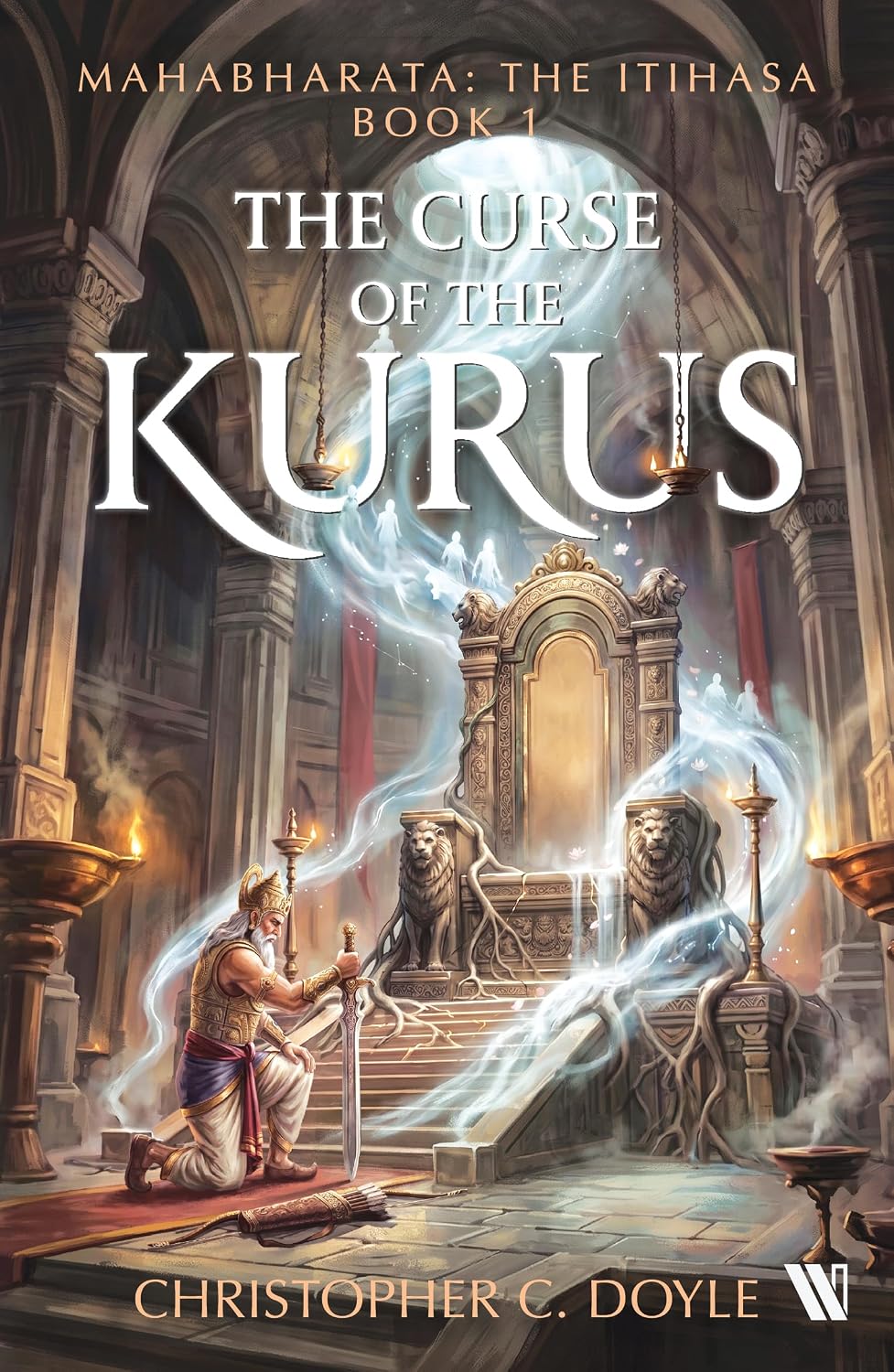
The Mahabharata is one of the world’s greatest epics, but for many modern readers, its enormous scale, complex characters and layers of stories can make it difficult to know where to begin. Christopher C. Doyle’s The Curse of the Kurus, the first book in his Mahabharata: The Itihasa series, offers an engaging way into this timeless epic.
The story begins with a curse—one that sets in motion events that will shape generations of the Kuru dynasty. From the world of Hastinapur to the lives, ambitions and conflicts of the people who inhabit it, Doyle recreates the epic as a fast-paced narrative while staying rooted in the traditional story of the Mahabharata.
What makes the book particularly accessible is its storytelling style. Doyle approaches the Mahabharata with the pace and momentum of a thriller, turning a familiar epic into an immersive reading experience. Intrigue, love, sacrifice, revenge, extraordinary births, devastating deaths and battles unfold against the larger story of a dynasty caught in the grip of fate.
At the heart of the book is the world of the Kurus—a world where personal choices have consequences far beyond the individual. Characters are driven by ambition, loyalty, love, duty and revenge, making their struggles feel surprisingly contemporary despite the ancient setting.
Doyle’s background as a storyteller who combines mythology, history and science is also reflected in his approach. His earlier works, including The Mahabharata Secret and The Mahabharata Quest series, established his interest in bringing ancient mysteries to contemporary readers. With The Curse of the Kurus, he turns his attention directly to the epic itself.

The book’s biggest strength is perhaps its ability to make the Mahabharata feel immediate. Rather than presenting it simply as a revered ancient text, Doyle creates a vivid narrative world populated by people whose hopes, fears and choices drive the story forward.
The Curse of the Kurus is therefore more than a retelling. It is an invitation to revisit the Mahabharata through the lens of contemporary storytelling—fast, visual and accessible, while remaining connected to the epic’s original narrative.
For readers discovering the Mahabharata for the first time, it can serve as an accessible entry point. For those already familiar with the epic, it offers the pleasure of encountering its characters and events once again through a fresh narrative voice.
A compelling start to a series that brings one of India’s greatest stories to a new generation of readers.
