Technology has transformed the way India governs, delivers public services and interacts with its citizens. But behind every technological breakthrough lies a larger question: how should the state regulate technology without losing sight of the rights and interests of people?
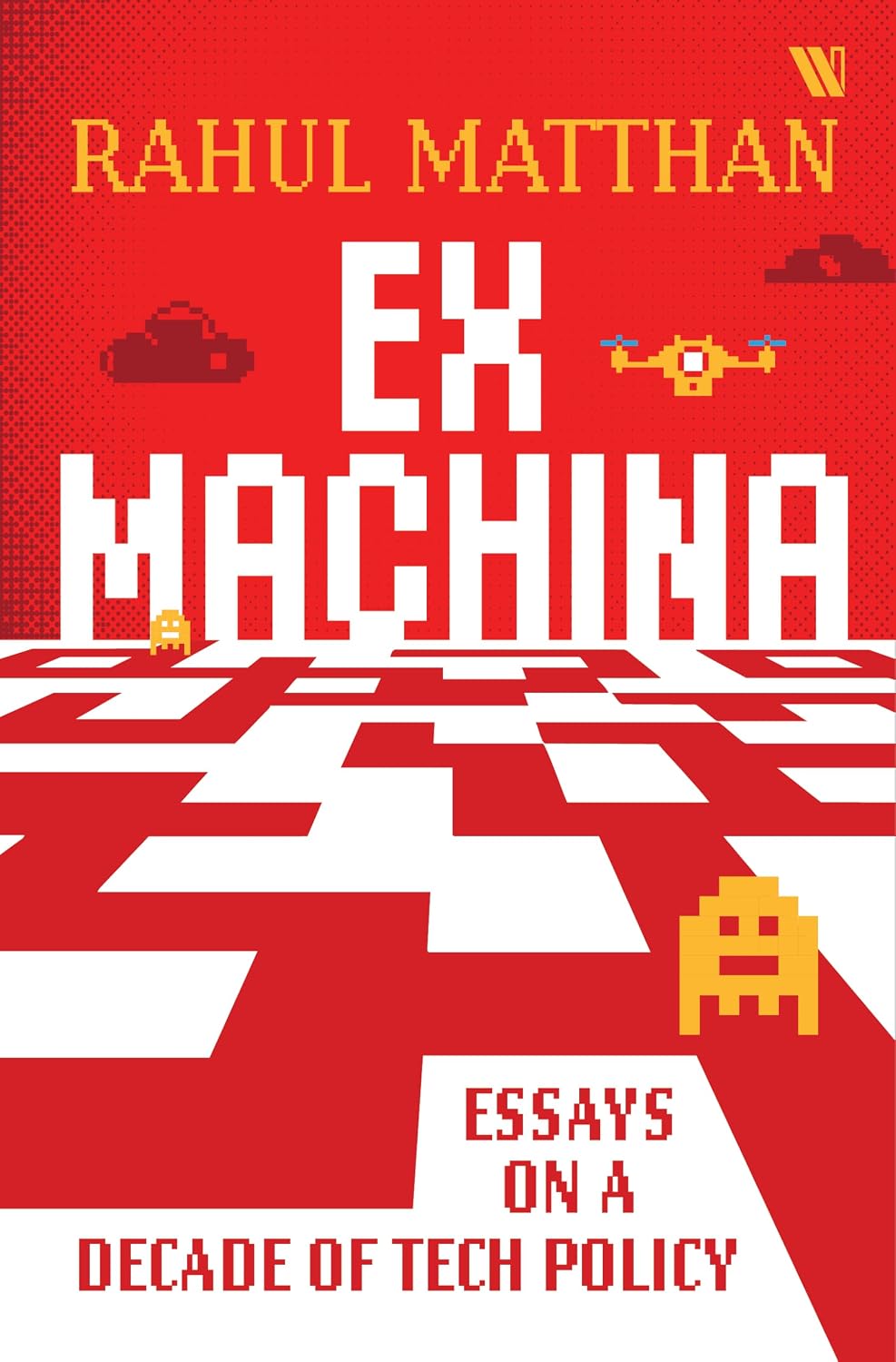
Rahul Matthan’s new book, Ex Machina: Essays on a Decade of Tech Policy, attempts to answer that question by bringing together a carefully curated selection from his weekly Ex Machina columns, written over the past decade.
Published by Westland Books, the book traces some of the most consequential developments in India’s technology policy—from digital identity and UPI to drones, maps and artificial intelligence. Rather than treating these developments simply as technological milestones, Matthan examines them through the combined lens of law, policy, governance and society.
What makes the book particularly relevant is its timing. India has emerged as one of the world’s most ambitious adopters of digital public infrastructure, while technologies such as AI are advancing faster than policymakers can often respond. Ex Machina looks at how the country arrived at this point and, equally importantly, what the choices made along the way mean for citizens.
The book is divided broadly into two sections—digital public infrastructure and technology. The essays look at the evolution of digital identity, UPI payments, drones, mapping technologies and AI, while examining the regulatory and social questions surrounding them.
One of the book’s key strengths is that it does not present technology as either an unquestioned solution or an inherent threat. Instead, Matthan explores the complicated space in between. Technology can make government more efficient and services more accessible, but it can also create new questions around privacy, regulation, accountability and individual rights.
This makes Ex Machina particularly useful at a time when India is debating the next generation of digital governance. From AI regulation to the expansion of digital public infrastructure, many of the policy choices being made today could shape the country for decades.
Matthan’s experience adds another dimension to the book. A technology lawyer and partner at Trilegal, he has also been involved with several government committees dealing with areas including artificial intelligence, non-personal data and frontier technologies. During India’s G20 Presidency, he served as DPI Advisor to the Ministry of Finance.
The book’s larger argument is perhaps best captured in Matthan’s own reflection that progress in policy needs to be measured in years, rather than days. That perspective gives the collection a value beyond its individual essays. Read together, they become a record of how India’s technology policy evolved—and of the debates, uncertainties and compromises that accompanied that journey.
For policymakers and lawyers, the book offers a useful archive of India’s technology-policy journey. For technology professionals and students, it provides context on how seemingly technical questions eventually become questions of law and public policy. And for the general reader, it offers an accessible way to understand how technologies that are now part of everyday life came to shape the relationship between the citizen and the state.
The book’s biggest achievement is therefore not predicting what technology will do next. It is helping readers understand how policy decisions made yesterday have shaped the digital India of today—and why the decisions being made today will matter even more tomorrow.
Ex Machina: Essays on a Decade of Tech Policy was released on September 28 and is published by Westland Books.
