Book Review | Reading the Fault Lines Behind Disruption
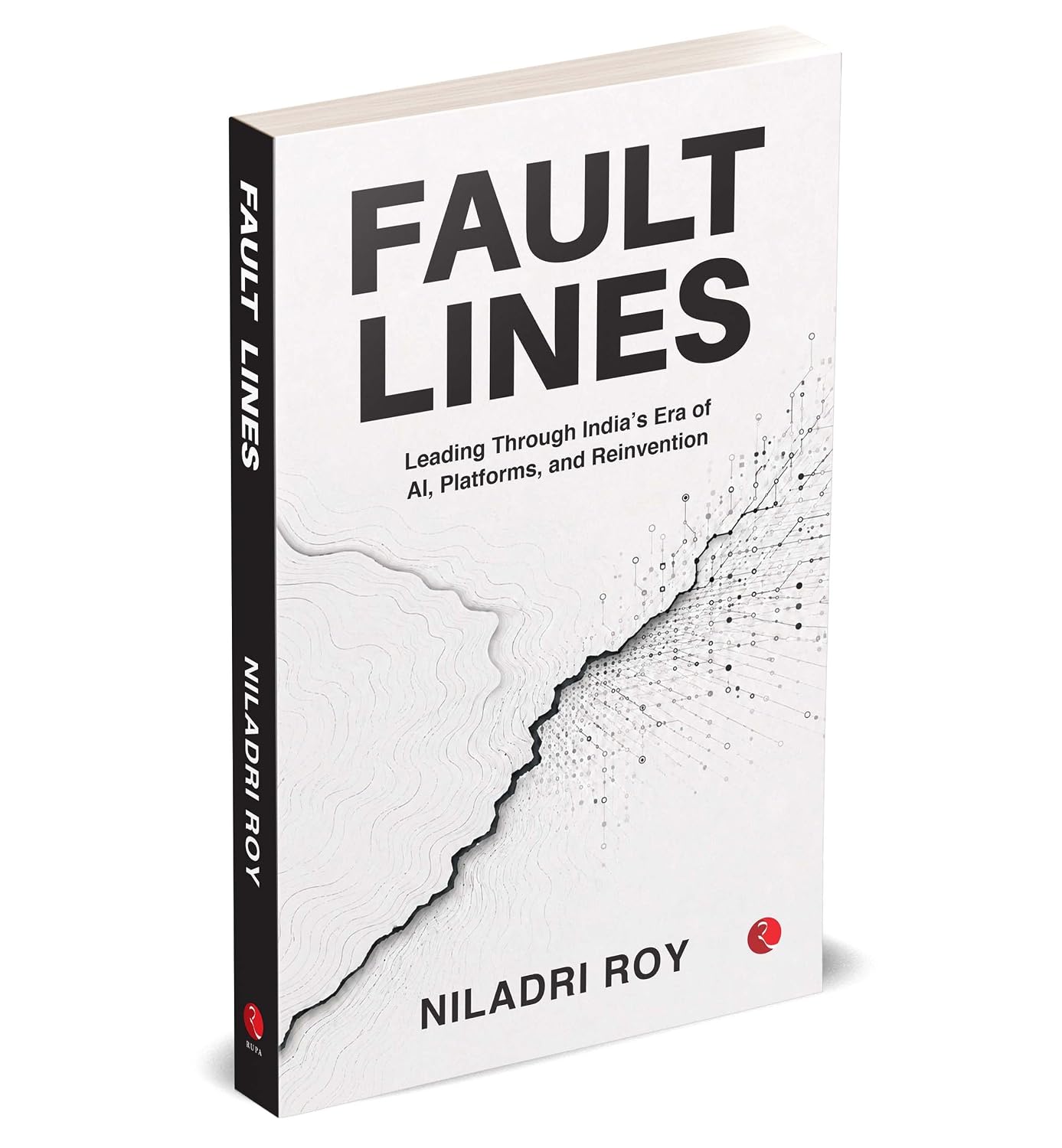
Disruption rarely arrives without warning. It often builds quietly, through small changes in technology, consumer behaviour, business models and organisational thinking, before becoming impossible to ignore. It is this less visible side of disruption that strategist and advisor Niladri Roy examines in Fault Lines: Leading Through India’s Era of AI, Platforms, and Reinvention.
The book’s central argument is straightforward: organisations often fail not because they cannot see change coming, but because they fail to recognise the structural weaknesses developing underneath their success. Roy calls these weaknesses “fault lines”—pressures that may remain invisible for years before triggering a major shift.
The idea becomes particularly relevant as India moves through a period of rapid technological and economic change. Artificial intelligence, digital platforms, public digital infrastructure and changing consumer expectations are altering how businesses operate and compete. For leaders, the challenge is no longer simply responding to disruption after it happens, but identifying the signals before they become a crisis.
Roy draws from India’s journey since liberalisation and examines the evolution of digital infrastructure, platforms and AI to explain how disruption takes shape. The book also asks an important question: why do established organisations, often equipped with resources and experienced leadership, struggle to respond even when the signs of change are visible?
One of the book’s strengths is its attempt to turn this broad question into a practical framework. Roy introduces tools such as the Fault Line Fragility Index, Early Signal Radar, Fault Line Disruption Dashboard and Fault Line Maturity Model. These are designed to help organisations identify vulnerabilities, detect early signals and assess their preparedness for an uncertain business environment.
The framework gives the book a practical orientation rather than making it simply another discussion about the future of AI. Its larger focus is leadership—how decision-makers interpret signals, challenge established assumptions and prepare organisations for changes that may not yet be visible in conventional business metrics.
Roy’s three decades of experience as a strategist, educator and advisor inform this approach. His work with CXOs, boards and leadership teams provides the foundation for examining the intersection of technology, strategy, governance and organisational change.
At a time when AI is generating both excitement and anxiety across industries, Fault Lines makes a useful distinction between technology-driven disruption and the deeper organisational changes that technology can expose. The book suggests that technology may be the trigger, but the real vulnerability often lies within the organisation itself.
The book is particularly relevant for business leaders, entrepreneurs, strategy professionals and readers trying to understand how Indian organisations can navigate the next phase of technological change. Its strongest message is also its simplest: the biggest disruption may not be the event itself, but the warning signs that organisations chose not to read.
Fault Lines ultimately invites readers to look beneath the surface of success and ask whether the systems supporting it are resilient enough for what comes next.
Fault Lines: Leading Through India’s Era of AI, Platforms, and Reinvention
By Niladri Roy | 216 pages | ₹395
