What happens when technology becomes so deeply woven into everyday life that it no longer feels like technology at all?
What if an artificial intelligence can prepare your breakfast, adjust your clothes, select what you want to watch, anticipate your needs and even understand your emotions? And what happens when the same technology begins to occupy spaces once reserved for memory, companionship and human relationships?
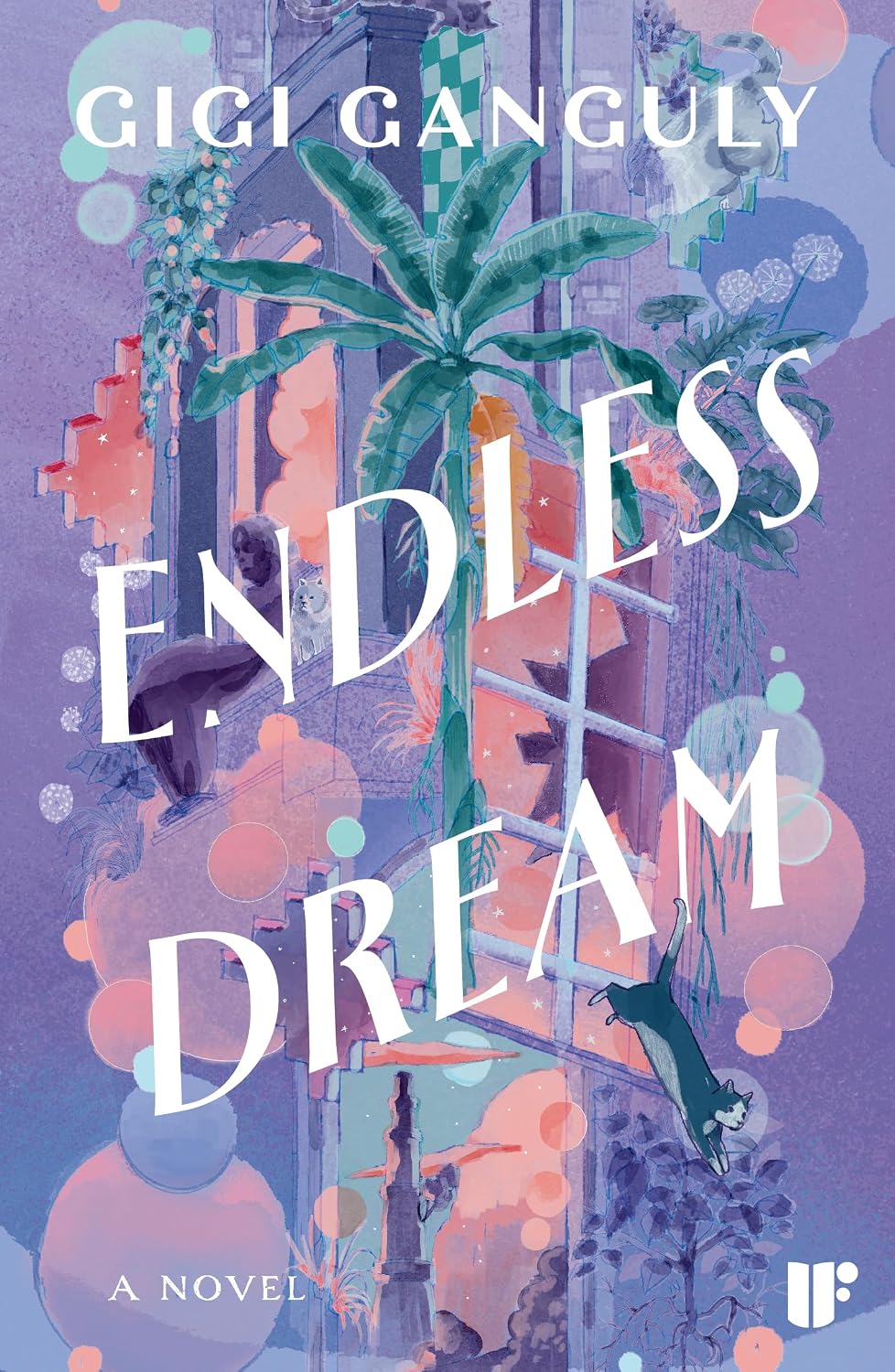
These are some of the intriguing questions at the heart of Gigi Ganguly’s Endless Dream, a speculative fiction novel that looks far beyond the familiar debate over whether artificial intelligence is a boon or a threat.
Rather than presenting AI as either humanity’s saviour or its destroyer, Ganguly imagines something more complicated—and perhaps more believable: a future of coexistence between humans, non-human animals and non-human intelligence.
The result is a book that appears futuristic on the surface but is ultimately deeply concerned with very familiar human emotions—loneliness, memory, grief, companionship, ageing, identity and the need to belong.
A future that feels strangely familiar
The book moves across an expansive timeline, beginning in 2195 and stretching thousands of years into the future. Its premise is built around multiple characters and situations, each offering a different glimpse into how humans and artificial intelligence might coexist.
Anita, an elderly woman living in Noida in 2195, finds companionship through an AI avatar of her beloved dog Lucy. In another period, Luhar’s visit to the National Museum leads her into an AI loop. Elsewhere, a battle between the successors of a powerful AI corporation produces an unexpected contender. Inspector Dos is forced to remain in the physical world while his deceased family exists in a virtual one.
These stories suggest that Ganguly is less interested in predicting a single future than in exploring many possible futures.
That is one of the book’s most appealing ideas.
Technology changes. Human questions remain.
Anita and the loneliness of an automated life
The opening section featuring Anita is particularly effective because it introduces the future without making it feel alien.
Anita wakes to the sounds of birds, leaves and animals. Her home speaks to her. Her bathroom is automated. The faucet recognises her presence and prepares her toothbrush. Her AI assistant, Hez, knows her breakfast preferences. A robot brings her coffee and biscuits. Her television understands what she wants to watch.
Almost everything around her has been designed to make life easier.
And yet Anita is lonely.
This contrast is crucial to understanding Endless Dream.
Ganguly does not introduce technology through spectacular machines or dramatic displays of futuristic power. Instead, she places AI inside the smallest routines of everyday existence. The technology is in the kitchen, the bathroom, the living room and even in the way Anita consumes entertainment.
The future, therefore, does not arrive with a bang.
It arrives quietly, as convenience.
And that makes the questions raised by the novel more unsettling.
When comfort becomes a form of escape
One of the most striking moments in the opening comes when Anita recognises how easy it is to shut out difficult thoughts.
She sits comfortably in her chair, watches an old favourite on television, drinks coffee and eats biscuits. Everything around her has been carefully calibrated for comfort.
Yet instead of feeling entirely content, she suddenly becomes aware of the possibility that she is using comfort to avoid difficult emotions.
This is an important observation because it moves the book beyond the usual arguments about AI.
The danger may not always be that machines become too powerful.
Perhaps the more subtle danger is that life becomes so comfortable that we stop confronting the things that make us human.
Pain, regret, loneliness and grief are uncomfortable. Technology can potentially make it easier to avoid all of them.
But if we remove every uncomfortable experience, what happens to reflection, memory and emotional growth?
Ganguly leaves these questions hanging in the air.
Memory as both gift and burden
Memory is another important thread running through the opening.
Anita is 114 years old, and her physical decline is becoming increasingly apparent. She is given a new “memory jelly” intended to strengthen her mind and help her retain memories.
The idea is both amusing and unsettling.
For most of human history, ageing has involved the gradual loss of memory. In Ganguly’s future, technology and medicine attempt to intervene even there.
But the deeper question is not simply whether memory can be preserved.
It is what happens when we can preserve everything.
Memory is not always pleasant. It contains love and loss, happiness and regret. It can comfort us, but it can also keep us tied to people and moments that are no longer part of our lives.
For Anita, memory is closely connected to Lucy, the beloved dog whose absence remains emotionally present.
The novel therefore connects technological questions about memory with deeply human questions about grief.
AI and the idea of companionship
Perhaps the most emotionally interesting aspect of Endless Dream is its treatment of companionship.
Anita does not simply use AI as a tool. Her relationship with her technologically enabled home is conversational and intimate. Hez knows her preferences, responds to her needs and is programmed with empathy.
This raises an important question:
If an artificial intelligence understands our habits, responds to our emotions and is always available, can it become a genuine form of companionship?
Ganguly does not appear interested in giving an easy yes or no.
Instead, she explores the emotional grey area between assistance and companionship.
The idea becomes even more complicated when AI avatars are connected to deceased loved ones or animals. At that point, technology begins to occupy the territory of memory and mourning.
Can an artificial representation of someone we have lost provide comfort?
And if it can, does that make grief easier—or does it prevent us from truly accepting loss?
These are questions that give the novel emotional weight beyond its speculative premise.
A world beyond human-centred storytelling
Another defining feature of the book is its attempt to move beyond a purely human perspective.
The description of Endless Dream explicitly places humans, non-human animals and non-human intelligence within the same larger vision of coexistence.
This connects the novel to Ganguly’s earlier work, particularly Biopeculiar, which also explored perspectives beyond the conventional human viewpoint.
Her interest is not simply in imagining smarter machines.
It is in questioning the assumption that humans must always remain at the centre of every story.
That gives the novel a broader ecological and philosophical dimension.
The future Ganguly imagines is therefore not merely technological. It is also about how our understanding of intelligence, consciousness and life itself might change.
The strength of Ganguly’s speculative fiction
Ganguly’s background helps explain the distinctive tone of the writing. She holds a Master’s in Creative Writing from the University of Limerick and previously worked as a journalist before becoming an editor in Delhi-NCR. She is also the author of One Arm Shorter Than the Other and Biopeculiar.
The descriptions of her earlier work point towards a consistent literary interest in empathy, non-human perspectives and the imaginative possibilities of speculative fiction.
That sensibility is visible in Endless Dream.
Her future is not cold or mechanical.
It is populated by ordinary human emotions.
The prose in the supplied opening is similarly attentive to small details—the sound of birds, sunlight entering Anita’s room, her slippers, coffee, biscuits, the park outside her window and the dogs arriving with their owners.
These details ground the futuristic setting in recognisable human experience.
The irony of an intelligent future
There is a quiet irony running through Anita’s world.
Her home is extraordinarily intelligent, yet Anita herself is wrestling with questions that technology cannot easily resolve.
Her environment can anticipate what she wants to eat.
It can prepare her bathroom.
It can select entertainment based on her state of mind.
It can monitor her health.
But can it tell her how to deal with the absence of someone she loves?
Can it tell her how to make peace with mortality?
Can it answer what makes a life meaningful?
This distinction between solving problems and understanding existence appears to be central to the novel.
Technology may become exceptionally good at taking care of us without necessarily being capable of answering the most fundamental questions about why we live.
The future is not necessarily dystopian
One of the refreshing aspects of Endless Dream is that it does not appear to rely on the conventional dystopian template.
There is no immediate suggestion that AI has destroyed humanity or taken control of the world.
Instead, Ganguly imagines a world in which humans and artificial intelligence have gradually become intertwined.
That makes the book more nuanced.
The future is not presented simply as frightening.
It is comfortable, fascinating, occasionally funny and deeply strange.
And precisely because it is not obviously dystopian, the reader is encouraged to ask more difficult questions about the choices being made.
Would we willingly surrender certain freedoms in exchange for comfort?
Would we allow AI to manage our homes, memories and relationships?
Would we choose a virtual version of someone we love over the pain of accepting their absence?
These questions are much closer to the technological choices already confronting society.
A meditation on coexistence
At its heart, Endless Dream seems to be asking readers to reconsider the boundaries between human and non-human.
The book’s different timelines and characters allow Ganguly to explore this idea from multiple directions.
AI may be a companion.
It may be an adversary.
It may become part of family life.
It may challenge existing ideas of consciousness.
And perhaps, eventually, it may become another form of intelligence with which humans must learn to coexist.
The scale of the novel is therefore enormous. It begins with something as intimate as an elderly woman looking out of her window at dogs in a park and expands into questions about the distant future of intelligence and existence.
That movement—from the deeply personal to the existential—is what gives the premise its appeal.
Verdict
Endless Dream is not simply a novel about artificial intelligence.
It is a novel about what it means to remain human in a world where intelligence is no longer exclusively human.
Gigi Ganguly takes a subject that is often reduced to technological optimism versus technological fear and gives it a more humane and imaginative treatment. Her future is neither entirely utopian nor dystopian. It is messy, intimate, emotionally recognisable and full of contradictions.
The opening story of Anita is especially effective because it demonstrates the novel’s larger method: take an extraordinary technological possibility and place it inside an ordinary human emotion.
A house can think.
A faucet can speak.
A television can understand its owner.
A robot can serve coffee.
But loneliness remains loneliness.
Memory remains memory.
Grief remains grief.
And mortality remains perhaps the one problem no technology can completely solve.
That tension makes Endless Dream an intriguing addition to contemporary speculative fiction. It invites readers not merely to imagine what technology might become, but to consider what we might become alongside it.
And perhaps that is the book’s most interesting dream of all: not a future in which humans defeat technology, nor one in which technology defeats humans, but one in which different forms of intelligence learn to exist together.
Best suited for: Readers of speculative fiction, literary science fiction, AI-themed fiction, philosophical fiction and stories that explore the intersection of technology, memory, nature and human relationships.
