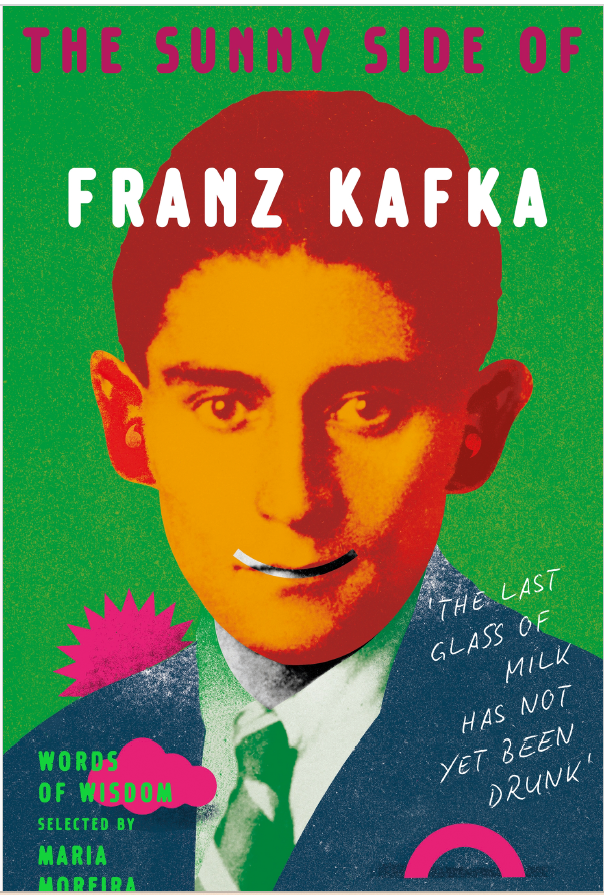
Franz Kafka is hardly the writer one turns to for a dose of optimism. The man who imagined a human being waking up as an insect and characters trapped in inexplicable nightmares is better known for unsettling readers than comforting them. But what if the author of The Metamorphosis had a sunnier side? Maria Moreira’s The Sunny Side of Franz Kafka answers that question through his letters, revealing a writer whose warmth, humour and tenderness have remained largely hidden behind his reputation for existential despair.
Drawing primarily from Kafka’s letters to his lovers, friends and family, the collection offers an intimate glimpse into the writer’s personal world. Away from the darkness of The Trial and The Metamorphosis, readers encounter a voice concerned with the everyday realities of life – love, friendship, work, emotional well-being and the need to find happiness in small moments. It is an interesting literary discovery, particularly for readers who have come to associate Kafka exclusively with existential despair.
The strength of the book lies in its ability to challenge an established literary image. Kafka, who gave the world some of the most disturbing explorations of human helplessness, could also be playful, compassionate and deeply sensitive. His letters reveal a man who experienced the same uncertainties, emotional struggles and longing for companionship that define ordinary human relationships. His observations, sometimes humorous and at other times tender, make him appear less like an intimidating literary figure and more like a friend offering an understanding word at the right moment.
Moreira’s association with Kafka’s writings began when she encountered his letters and diaries as a teenager. Interestingly, it was this personal correspondence rather than his celebrated fiction that introduced her to the writer’s warmer personality. In 2022, she began sharing these discoveries through her X account, The Sunny Side of Franz Kafka, which has attracted more than 150,000 followers. The popularity of the account also reflects a wider interest in rediscovering literary figures beyond the labels that have come to define them.
The collection raises an interesting question: can a writer known for depicting the absurdities and anxieties of existence also become a source of reassurance? Moreira’s selection suggests that the answer is yes. Kafka’s reflections on relationships, the demands of work, the importance of rest and the small pleasures of everyday existence carry an unexpected emotional resonance. His words remind readers that vulnerability is not necessarily a weakness and that even in difficult circumstances, there is room for affection, humour and hope.
Another appealing aspect is the accessibility of the collection. Unlike Kafka’s novels, which often demand patience and close engagement with their complex worlds, these short extracts can be read independently. Readers can open the book at any page, spend a few moments with a passage and return to it whenever they need a little perspective. For younger readers who may find Kafka’s fiction daunting, this could also serve as an inviting introduction to the writer and his personal correspondence.
However, the book is best approached as a curated collection of personal reflections rather than a comprehensive portrait of Kafka or a substitute for reading his original literary works. Its selection naturally foregrounds the encouraging and affectionate aspects of his personality, leaving much of the complexity and contradiction that defined his life and writing outside its scope. Readers looking for a deeper understanding of Kafka’s literary philosophy may need to turn to his novels, diaries and complete correspondence.
Nevertheless, the book succeeds in doing something valuable: it makes a familiar literary figure feel unfamiliar again. At a time when everyday life is increasingly shaped by anxiety, uncertainty and the pressure to constantly remain productive, Kafka’s observations offer a gentle reminder to pause, value relationships and find meaning in ordinary experiences.
The Sunny Side of Franz Kafka is more than a collection of uplifting quotations. It is an attempt to rediscover the human being behind the literary reputation. A century after his death, Kafka continues to unsettle readers through his fiction, but this collection reveals that he also had the ability to comfort them. Sometimes, the most surprising discoveries about a writer come not from his celebrated works but from the private words he left behind.
An intimate, thoughtful and refreshing literary collection that presents a different Kafka – one who reminds us that even in a world full of uncertainties, warmth, humour and human connection remain worth holding on to.
