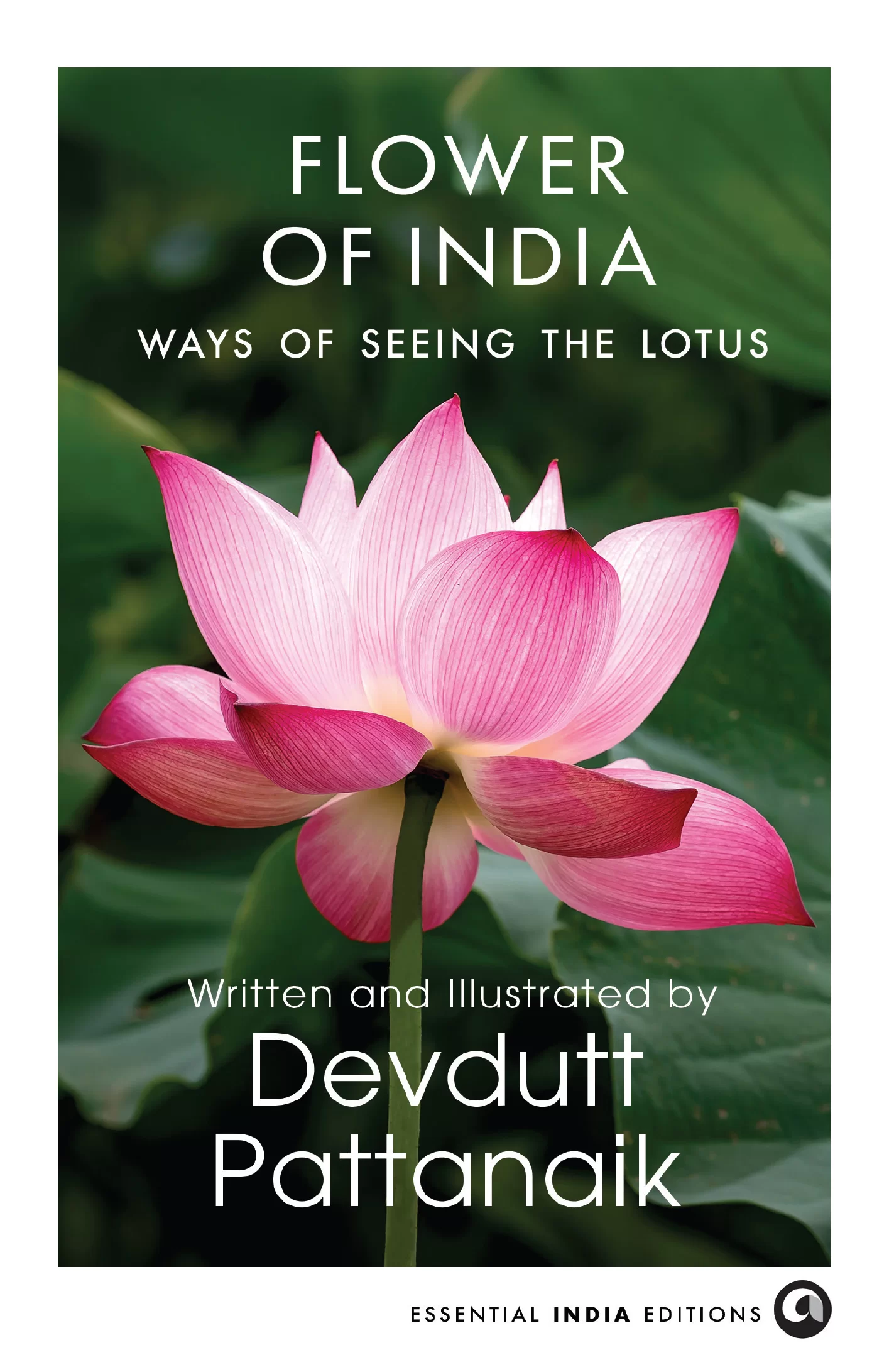
Some symbols are so embedded in everyday life that they fade into the background. The lotus is one of them. In Flower of India, Devdutt Pattanaik brings it back into focus, unpacking its many meanings across mythology, religion, art and daily practice.
This is not a conventional history of a plant. Pattanaik treats the lotus as an idea—one that recurs in India’s cultural imagination as metaphor, motif and sacred form. Moving with ease from temple iconography to cuisine and sensuality, he shows how a single symbol can hold contradictions while remaining deeply coherent.
The strength of the book lies in its accessibility. Pattanaik writes with clarity and ease, making layered cultural insights feel conversational without losing depth. His approach is interpretative rather than analytical; he is less concerned with debating history than with exploring meaning. Readers looking for rigorous historical scrutiny may find this limiting, but others will appreciate the fluid, reflective tone.
What the book ultimately offers is a shift in how we see the familiar. The lotus, so often reduced to ornament or emblem, emerges here as a carrier of ideas that have shaped Indian thought for centuries. It is a reminder that even the most ordinary symbols can hold extraordinary worlds within them.
