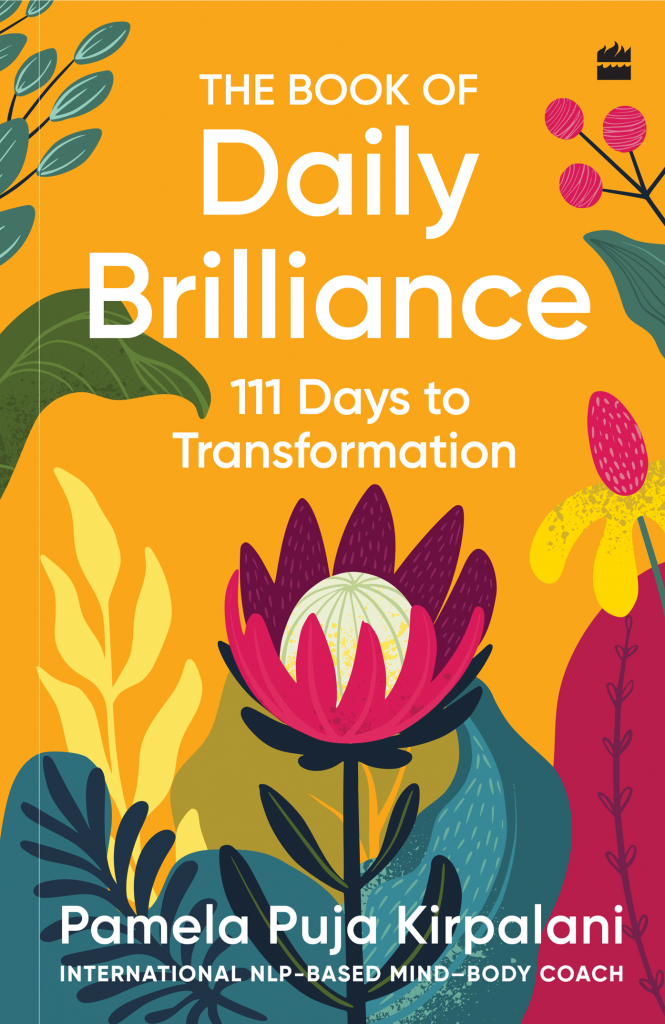
In an age of relentless scrolling and shrinking attention spans, books that ask readers to slow down—not speed up—stand out. Pamela Puja Kirpalani’s The Book of Daily Brilliance: 111 Days to Transformation, published by HarperCollins India, positions itself as one such companion: not a book to be consumed in a weekend, but one to be lived with, page by page.
Framed as a 111-day journey, the book leans into the growing appetite for mindful routines and accessible self-work. Each entry is designed as a short, reflective pause, touching on themes that most readers will recognise instantly—relationships, self-worth, love, pain, and the often-misunderstood ideas of abundance and surrender. The structure is simple, almost deceptively so, but that is also its strength. There is no rigid start date, no pressure to “keep up,” and no sense of failure if one falls behind. In that sense, Kirpalani taps into a more compassionate approach to self-improvement—one that accommodates the messiness of real life.
What works in the book’s favour is its tone. Rather than sounding prescriptive or overly philosophical, it reads like a steady, reassuring voice nudging the reader towards introspection. Kirpalani, who comes from a background in behavioural psychology and neuro-linguistic programming, brings in elements of those disciplines without weighing the text down with jargon. The result is a blend of emotional insight and practical reflection that remains accessible to a wide audience.
That said, the book operates within a familiar framework. Readers well-versed in the self-help and wellness genre may find echoes of existing ideas—manifestation, mindfulness, and inner healing are well-trodden ground. The distinction here lies less in novelty and more in delivery: the daily format encourages consistency over intensity, suggesting that small, repeated acts of awareness may lead to deeper change over time.
Kirpalani describes the book as something to “return to, not just read once,” and that intention is evident throughout. It functions less like a traditional narrative and more like a ritual—something to pick up in the quiet of the morning or at the close of a long day. For readers willing to engage with it patiently, the experience may feel less like reading and more like an ongoing conversation with oneself.
HarperCollins India, which continues to expand its catalogue of accessible non-fiction, presents this title as a response to the need for “a perfect pause amidst the busyness of life.” It’s a claim that feels well aligned with the book’s ethos.
The Book of Daily Brilliance does not promise dramatic overnight transformation, nor does it attempt to. Instead, it offers something subtler: a structured invitation to slow down, reflect, and recalibrate—one day, one page at a time. For a readership navigating the noise of modern living, that might be precisely the point.
