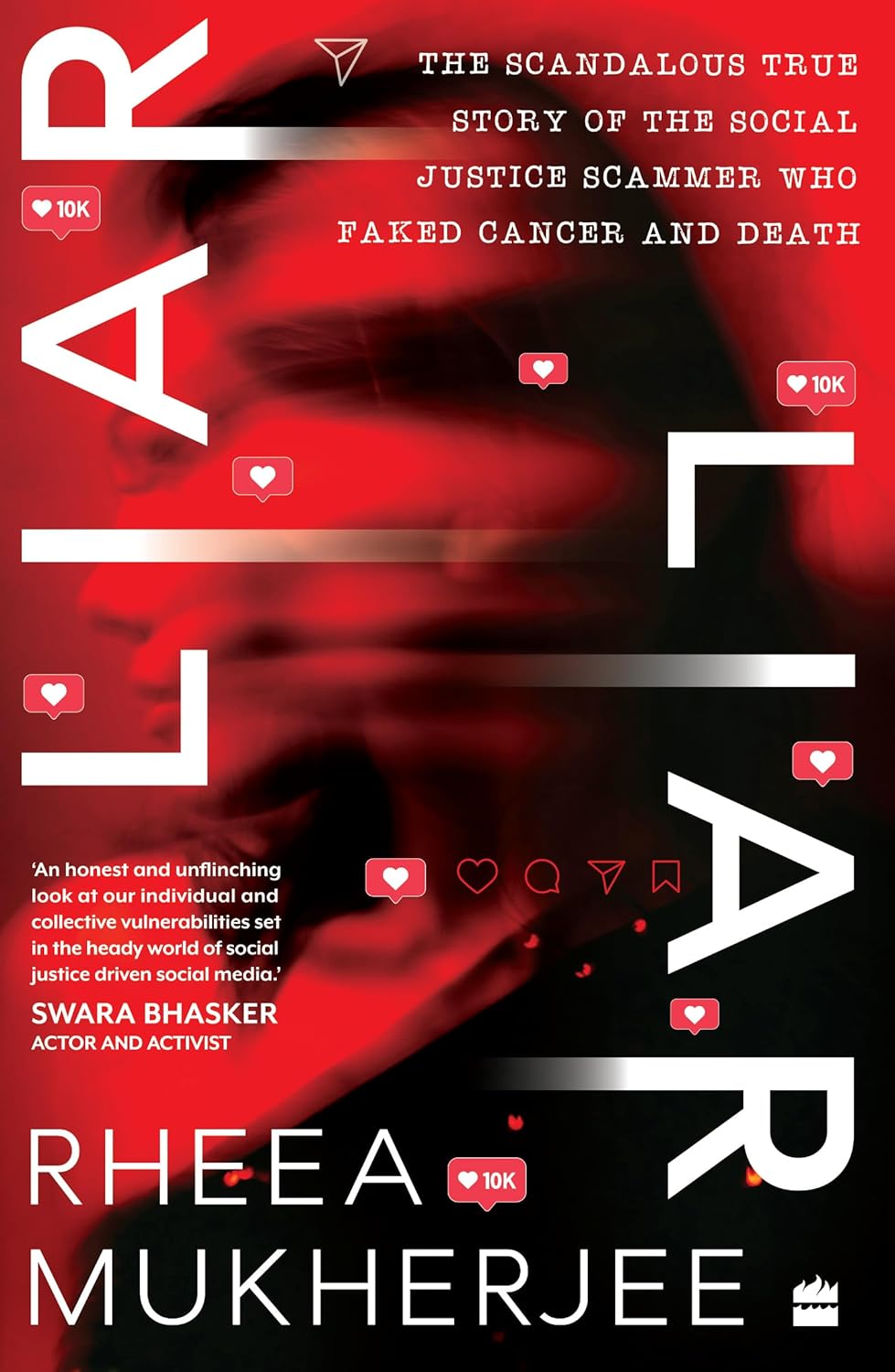
Some betrayals do not begin with greed. They begin with trust.
Liar, Liar is not just the story of an online scammer—it is a deeply unsettling portrait of how loneliness, empathy, politics, grief and the need to belong can all be manipulated in the digital age. What makes this book especially haunting is that the deception did not target careless people. It targeted thoughtful, politically aware and emotionally invested communities that genuinely believed they were helping someone in pain.
At the centre of the story is Sanch—a sharp, articulate young activist who seemed to embody everything progressive urban India admired. She was witty, politically conscious, emotionally vulnerable and fiercely vocal about caste injustice, animal rights, trans rights and social inequality. People listened to her because she sounded convincing, informed and morally fearless. And perhaps more importantly, people wanted to believe her.
Rheea Mukherjee writes not with detached outrage, but with the raw confusion of someone who trusted deeply and paid the emotional price for it. That honesty gives the book its emotional power. This is not simply an exposé of a scam; it is also a memoir of betrayal, guilt and self-interrogation.
What makes the narrative so gripping is how carefully it examines the mechanics of modern empathy. The book asks uncomfortable questions: Why do certain stories move us more than others? Why do appearance, language and social performance influence trust? How much of online activism is genuine solidarity, and how much of it depends on aesthetics, class and digital approval?
The writing is sharp, intimate and often painfully reflective. Mukherjee does not spare herself in the process. She revisits conversations, memories and ideological spaces with startling vulnerability, slowly uncovering how manipulation can hide behind intelligence, political awareness and emotional fluency.
One of the most compelling aspects of the book is its exploration of social media activism and its contradictions. Through discussions around caste, veganism, privilege and online outrage, the narrative reveals how digital spaces can blur the line between compassion and performance. The scam worked not because people were foolish, but because they were emotionally and politically invested in wanting to do the right thing.
Sanch herself emerges as both fascinating and terrifying—not because she was loud or careless, but because she understood people deeply. She knew how guilt worked. She understood the language of justice, vulnerability and belonging. She did not demand trust aggressively; she earned it patiently, layer by layer.
The emotional tension of the book lies in this very realization: sometimes the people who deceive us most successfully are the ones who mirror our values back to us.
At another level, Liar, Liar becomes a commentary on loneliness in the internet era. Online friendships feel intimate, communities feel immediate and grief becomes collective within seconds. But the same digital closeness can also create dangerous emotional blind spots where skepticism begins to feel cruel.
Rheea Mukherjee’s storytelling remains thoughtful throughout. Even while exposing the scam, she avoids turning the book into sensational drama. Instead, she focuses on the emotional wreckage left behind—the shame, confusion and fractured trust that linger long after the lies collapse.
Liar, Liar is disturbing, intelligent and deeply relevant to the times we live in. More than a true-crime memoir, it is a reflection on trust, identity and the fragile human desire to believe in goodness—even online.
