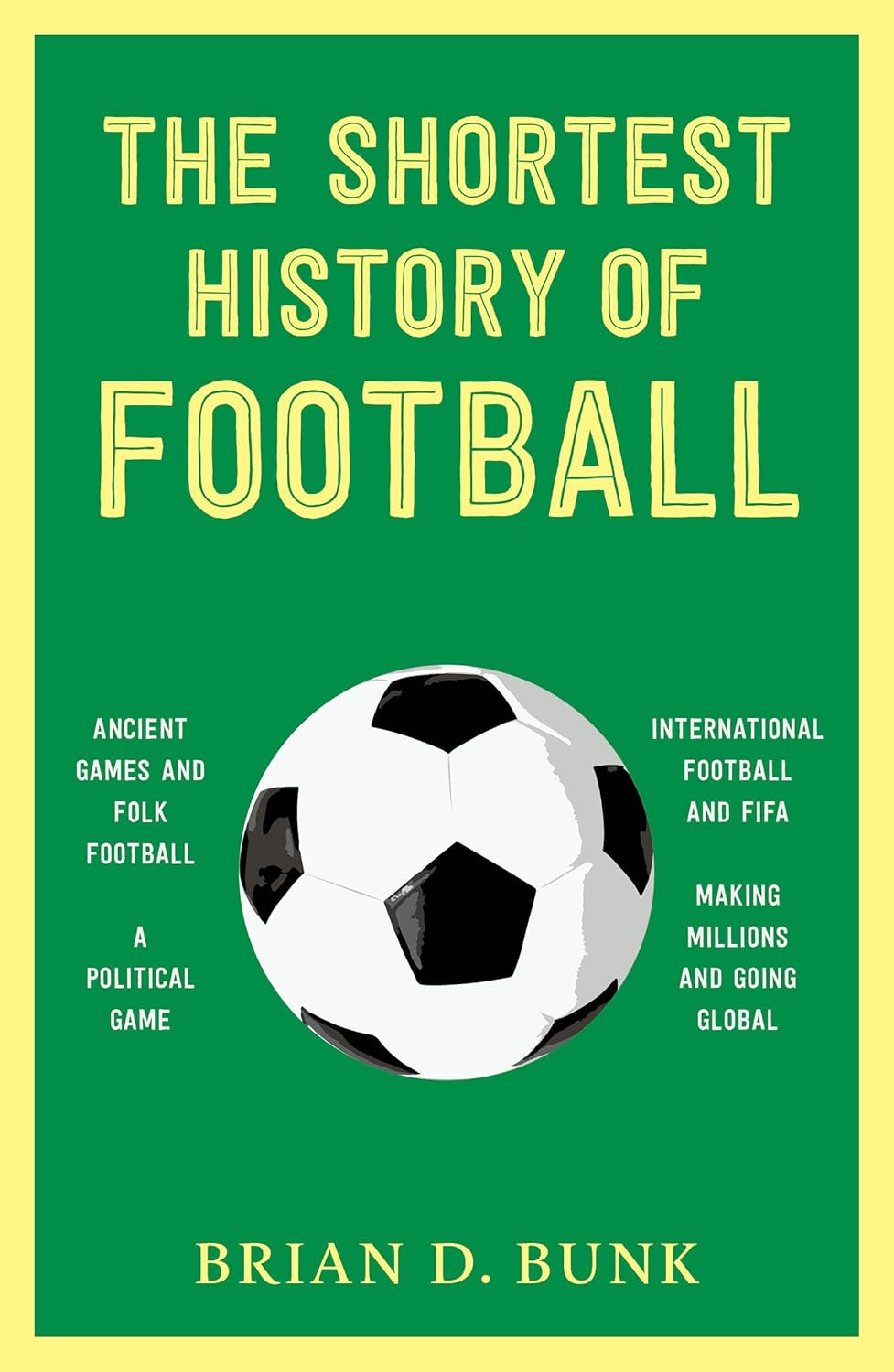
Football may be decided in ninety minutes, but its story has been unfolding for thousands of years.
In The Shortest History of Football, historian Brian D. Bunk takes on an ambitious challenge: explaining how a game that once existed in scattered forms across ancient civilisations grew into the world’s most popular sport, capable of stopping entire nations in their tracks.
The result is an entertaining and surprisingly expansive read that is as much about human history as it is about football.
Bunk reminds readers that football did not suddenly appear in Victorian England. Variations of kicking games were played centuries earlier, from Ancient China to pre-Columbian societies in the Americas. What Britain did was give shape and structure to a pastime that would eventually travel far beyond its shores and become a global obsession.
From there, the book moves swiftly through football’s remarkable journey across continents, cultures and generations.
What makes this book particularly enjoyable is that it refuses to reduce football to goals, trophies and star players. Instead, Bunk shows how deeply the sport is woven into the fabric of society. Football has marched alongside wars, revolutions, economic booms and political movements. It has united communities, fuelled rivalries and, at times, reflected the anxieties and ambitions of entire nations.
The author effortlessly moves from muddy World War I trenches to the dazzling stadiums of modern Saudi Arabia, from forgotten pioneers of women’s football to global icons such as Lionel Messi. Along the way, he uncovers stories that reveal why football has become much more than a game.

One of the book’s greatest strengths is its pace. Despite covering thousands of years of history, it never feels dense or academic. Bunk writes with clarity and enthusiasm, distilling complex historical developments into short, engaging chapters that are easy to absorb.
Even readers who do not follow football closely will find themselves drawn into its wider story.
The sections on women’s football are especially valuable, highlighting a long and often overlooked history that deserves far greater recognition. By placing these stories alongside the sport’s more familiar milestones, Bunk broadens our understanding of football’s cultural impact.
Perhaps the most fascinating takeaway is how football has become one of the few truly universal experiences left in the world. It crosses borders, languages and social divisions in a way few other phenomena can. Whether it is a child kicking a ball in a narrow alleyway or millions gathering to watch a World Cup final, the emotional connection remains remarkably similar.
That, Bunk suggests, is football’s enduring magic.
As excitement builds towards the FIFA World Cup 2026, The Shortest History of Football arrives at the perfect moment. It is a reminder that behind every match lies a much bigger story—one shaped by centuries of migration, politics, conflict, passion and collective memory.
This is not simply a history book for football fans. It is a fascinating account of how a game evolved into one of humanity’s most powerful shared experiences.
Lively, accessible and full of unexpected discoveries, Brian D. Bunk’s book is a winning introduction to the extraordinary story behind the beautiful game.
