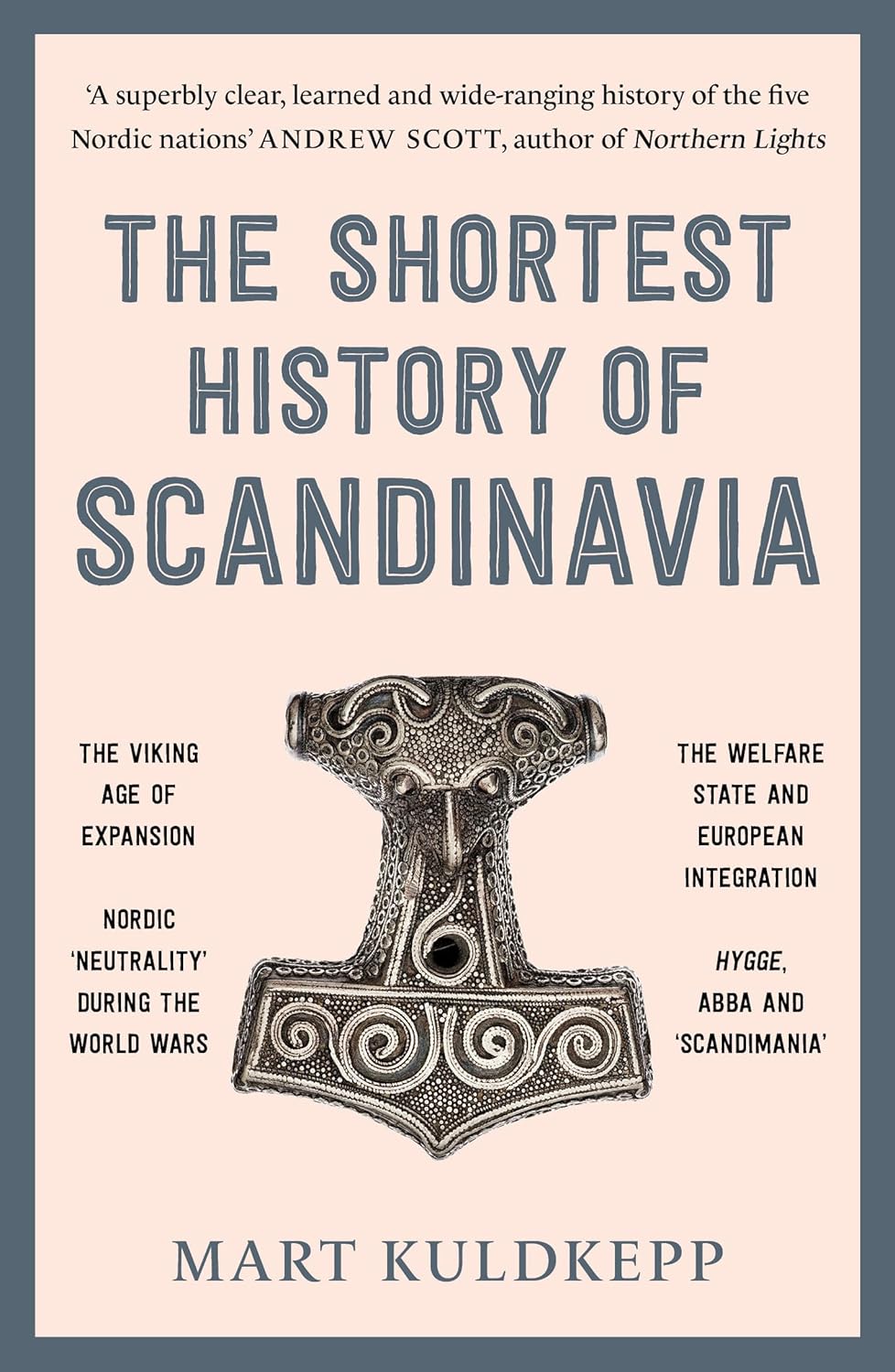
For many people, Scandinavia exists as a carefully curated image: snow-covered landscapes, cosy interiors, efficient public services, gender equality, and a population that somehow seems to have mastered the art of happiness. Add ABBA, the Nobel Prize and the irresistible appeal of hygge, and it is easy to see why the Nordic region has acquired an almost mythical status.
But Mart Kuldkepp’s The Shortest History of Scandinavia quickly reminds us that this polished image tells only part of the story.
Behind today’s reputation as one of the world’s most desirable places to live lies a history shaped by migration, conflict, conquest, disease and difficult moral choices. In this concise yet richly detailed book, Kuldkepp takes readers on a journey spanning 14,000 years, revealing how Denmark, Finland, Iceland, Norway and Sweden evolved into the societies we recognise today.
What makes this book so engaging is its ability to challenge assumptions. Scandinavia is often held up as a model for the rest of the world, but Kuldkepp refuses to present a fairy tale. Instead, he offers a nuanced portrait of a region that has experienced both remarkable achievements and uncomfortable failures.
The Vikings, for instance, are not portrayed merely as adventurous explorers but also as agents of expansion and violence. The book also confronts darker chapters that rarely enter mainstream discussions, including links to Nazi Germany, the rise of eugenics movements in the twentieth century and contemporary tensions surrounding immigration and identity.
These complexities make the narrative far more compelling.
At the heart of the book is an attempt to answer a deceptively simple question: What exactly makes Scandinavia Scandinavian?
Kuldkepp explores the idea of “Nordicness” — a shared identity that is difficult to define yet deeply influential. Despite differences in language, geography and political histories, the Nordic countries gradually developed common values centred on cooperation, social trust and collective responsibility.
The author argues that these values did not emerge overnight. They were shaped over centuries through crises, compromises and constant adaptation.
One of the book’s greatest strengths is its pace. Kuldkepp covers thousands of years without making readers feel overwhelmed. He moves seamlessly from the retreat of the Ice Age and the arrival of the region’s first settlers to medieval kingdoms, world wars and today’s debates about multiculturalism and globalisation.
The writing is concise but never superficial.
More importantly, the book explains why Scandinavia matters beyond its borders. The region’s ideas about welfare, sustainability and equality have influenced societies around the world, often becoming benchmarks for policymakers elsewhere. Yet Kuldkepp wisely avoids portraying the Nordic model as perfect. Instead, he presents it as an ongoing project—one that continues to evolve and face new challenges.
That balance is what makes the book so effective.
Ultimately, The Shortest History of Scandinavia is not a celebration of Scandinavian exceptionalism. It is an exploration of how a group of northern nations built a distinctive identity while navigating centuries of upheaval and change.
It reminds us that even the world’s most admired societies are products of complicated histories, difficult decisions and imperfect human choices.
For anyone curious about why Scandinavia continues to fascinate the world, this book offers an excellent place to begin.
Insightful, engaging and full of surprising revelations, this is a history book that goes far beyond familiar stereotypes to uncover the real story behind the Nordic world.
