Artificial intelligence can now draft essays, solve equations, summarise reports, and answer almost any question in seconds. But as technology grows smarter, an important question is becoming harder to ignore: are we becoming better thinkers, or simply better at finding quick answers?
In classrooms, offices and boardrooms, the conversation is gradually shifting. The real competitive advantage is no longer access to information—it’s the ability to ask the right questions, identify the real problem, weigh alternatives and make sound decisions. These are skills no chatbot can fully automate.
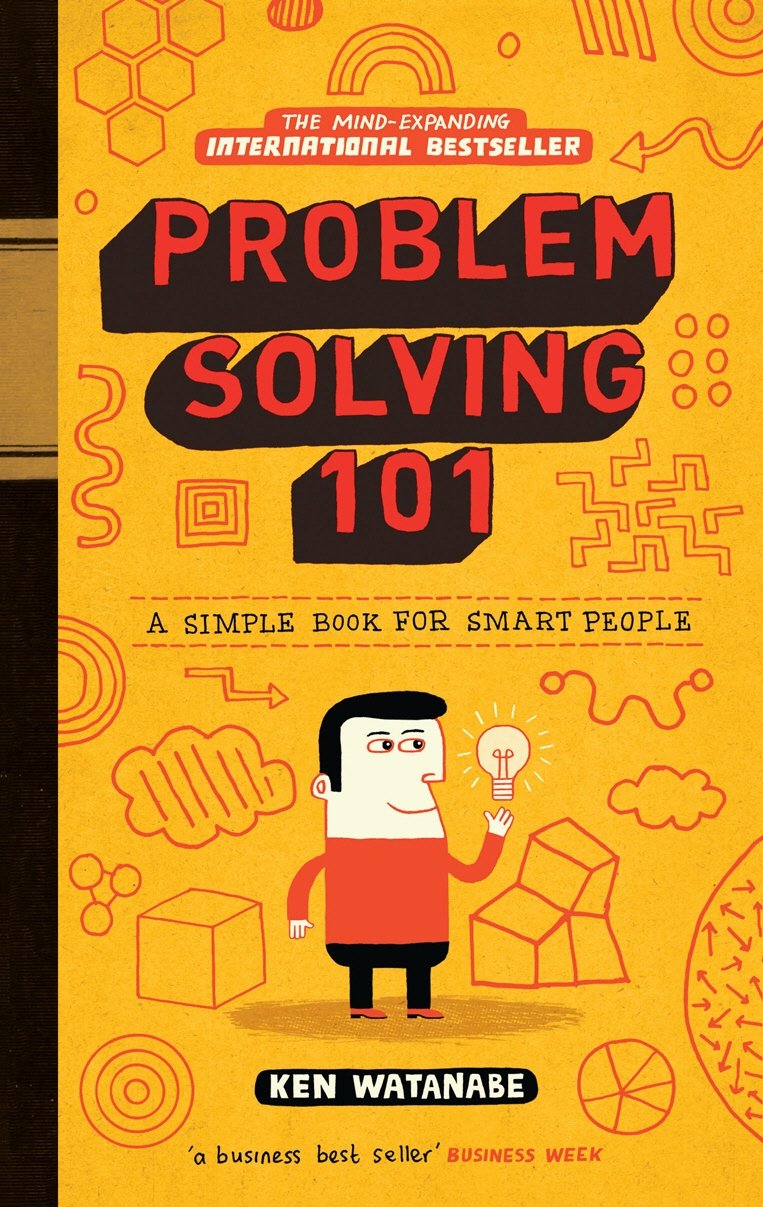
It is precisely this idea that makes Ken Watanabe’s Problem Solving 101 feel remarkably relevant, even though it was first written years before AI became part of everyday life.
Originally designed to teach Japanese schoolchildren how to think independently, the book has since become an international bestseller—and it’s easy to understand why. Instead of overwhelming readers with management jargon or complicated theories, Watanabe strips problem-solving down to its essentials, showing that it is not an innate talent reserved for brilliant minds but a skill anyone can learn with practice.
At its heart, Problem Solving 101 challenges one of the biggest misconceptions about intelligence: that smart people naturally solve problems better. Watanabe argues the opposite. Effective problem-solvers are not necessarily the smartest people in the room—they are simply those who know how to approach problems systematically.
This philosophy runs throughout the book. Drawing on his experience as a McKinsey consultant, Watanabe introduces practical frameworks that encourage readers to slow down before jumping to conclusions. Rather than rushing towards solutions, he urges us to first understand the problem itself—a lesson that feels increasingly valuable in a world obsessed with speed.
One of the book’s strongest features is its accessibility. Despite drawing from consulting methodologies, the writing never feels academic or intimidating. Watanabe uses illustrations, diagrams and relatable examples to explain concepts such as Logic Trees, hypothesis-driven thinking and structured decision-making. The visual approach makes even complex ideas feel surprisingly intuitive, allowing readers to apply them immediately to everyday situations.
Among the most useful ideas is the Logic Tree, a framework that helps break a large, confusing problem into smaller, manageable parts. Whether you’re deciding on a career move, planning a project, improving business performance or simply trying to organise your thoughts, the technique encourages clarity instead of guesswork.
The book also introduces a practical four-step problem-solving process:
Understand the current situation.
Identify the root cause.
Develop possible solutions.
Execute, evaluate and refine.
Simple on paper, these steps encourage a disciplined way of thinking that can prevent many of the mistakes caused by assumptions or rushed decisions. Watanabe repeatedly reminds readers that treating symptoms without identifying root causes rarely solves anything—a principle illustrated through clear, everyday analogies that make the lessons easy to remember.
Perhaps the book’s greatest strength is that it never confines problem-solving to the corporate world. Although Watanabe draws from his consulting background, his advice feels equally relevant to students preparing for exams, professionals managing teams, entrepreneurs building businesses and individuals making personal decisions. The frameworks are universal because they focus on thinking rather than expertise.
That said, readers looking for advanced management strategies or complex business case studies may find the book intentionally basic. Experienced professionals familiar with consulting frameworks might already know many of its concepts. But this simplicity is also what gives the book its enduring appeal. Watanabe writes with beginners in mind, making sophisticated thinking accessible without oversimplifying it.
Reading Problem Solving 101 today is a reminder that while technology continues to evolve at extraordinary speed, the most valuable human abilities remain surprisingly timeless. AI can generate answers almost instantly, but it cannot decide which question deserves to be asked in the first place. It cannot replace curiosity, judgement or thoughtful analysis.
That is ultimately what makes this book feel so current. Long before artificial intelligence entered our daily lives, Ken Watanabe recognised that education often emphasised memorising information instead of learning how to think. His solution was to teach readers a practical mindset—one that values observation, critical thinking, experimentation and continuous learning.
Problem Solving 101 succeeds because it does not promise shortcuts or magical formulas. Instead, it offers something far more valuable: a simple, practical framework for approaching challenges with greater clarity and confidence. Thoughtfully written, highly visual and refreshingly easy to understand, it is a book that rewards readers of every age.
In an era where answers are increasingly just a click away, Ken Watanabe reminds us that asking better questions—and thinking more clearly—may be the most important skill of all.
