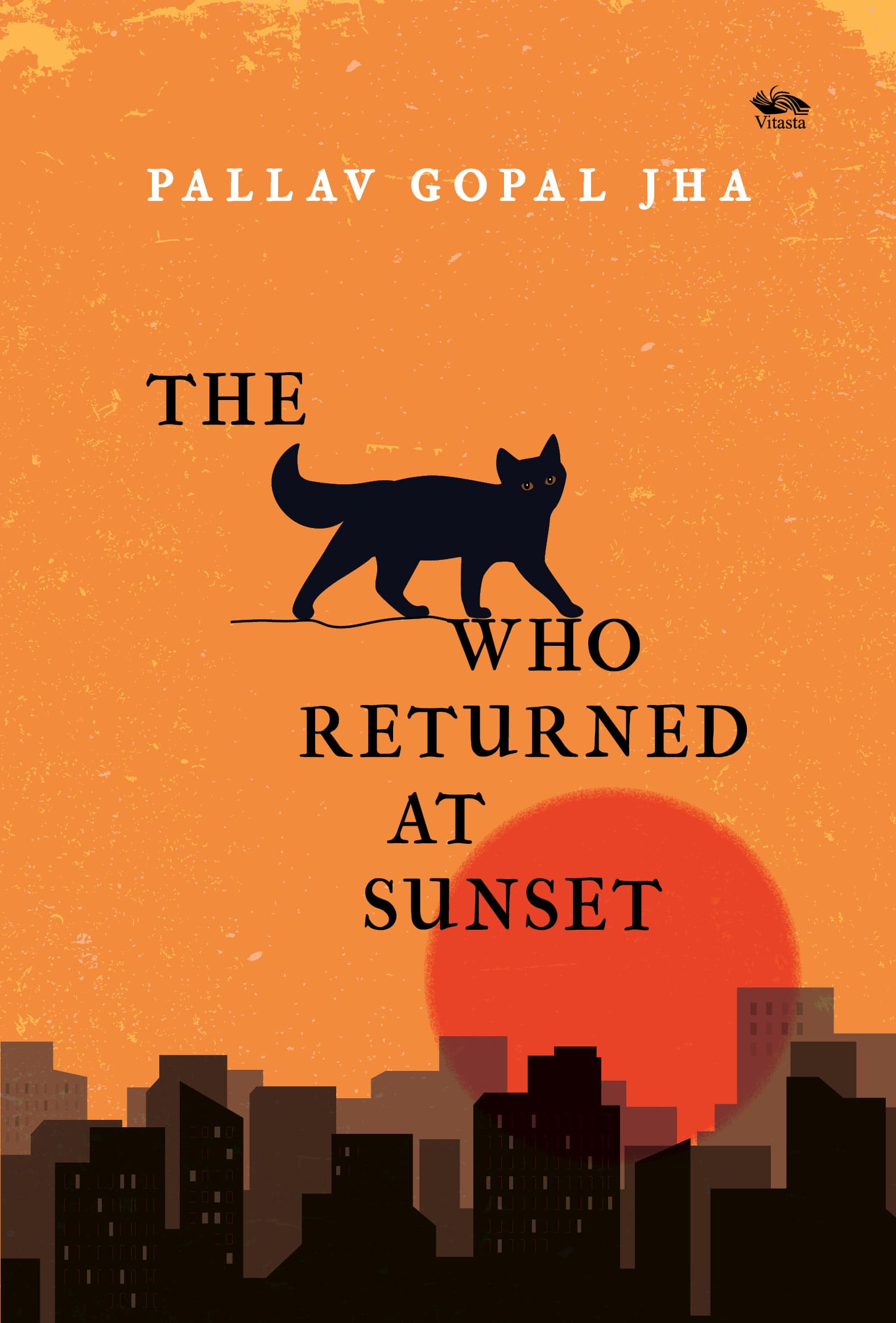
What if the one visitor capable of reopening your past arrived on four paws? That intriguing question lies at the heart of The Cat Who Returned at Sunset, Pallav Gopal Jha’s debut novel. Beginning with the unexpected return of a cat believed lost for a decade, the book slowly unfolds into a reflective exploration of memory, loss, belonging, and survival. It is less interested in dramatic revelations than in the quiet emotions that shape human lives.
The cat’s voice becomes the thread that ties together stories of violence, compassion, abandonment, and survival. As the narrative moves between scarred villages, moments of unexpected kindness, and cities that hold the promise of change, it reflects on the contradictions that define human life. The novel doesn’t seem interested in offering easy answers. Instead, it encourages readers to linger over questions about where we belong, what we carry from our past, and how we continue despite loss.
What stayed with me was the novel’s quiet, contemplative mood. The recurring imagery of dusk and resurfacing memories lends the story a lingering melancholy, making it feel intimate without becoming sentimental. The idea that survival is not just about enduring hardship but also about finding meaning in relationships and memories comes across with quiet strength.
Knowing that Pallav Gopal Jha spent more than a decade in the Indian Administrative Service adds another layer to the novel’s themes. His experiences of witnessing power, vulnerability, and resilience seem closely connected to the world the book seeks to explore. His belief that writing is “an attempt for survival” echoes throughout the novel’s emotional landscape.
For a debut, The Cat Who Returned at Sunset comes across as a thoughtful work of literary fiction that values introspection over spectacle. Readers who enjoy reflective narratives that explore memory, identity, and the complexities of human nature are likely to appreciate its quiet, lingering impact.
