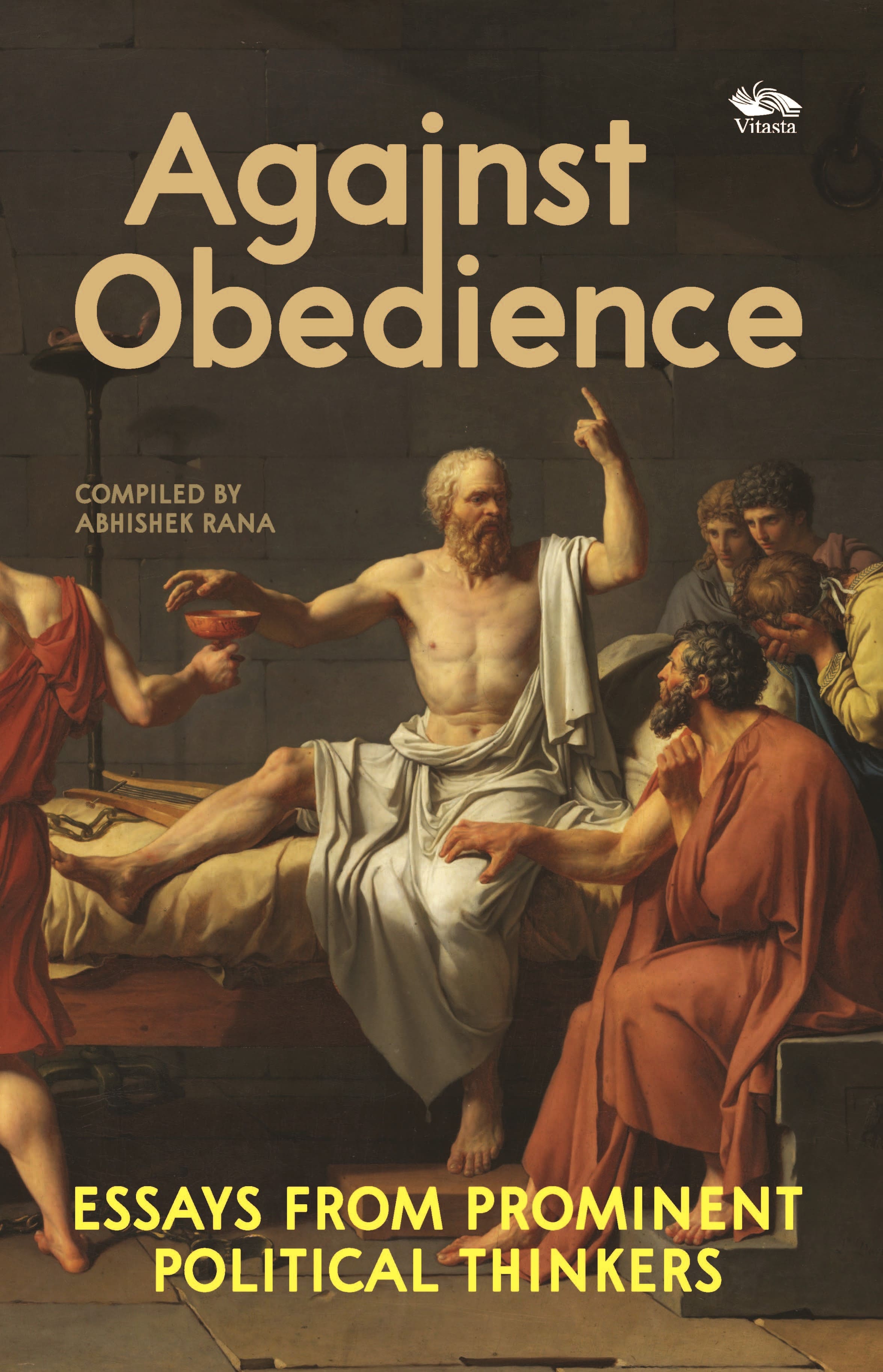
At a time when democracies across the world are grappling with questions of free speech, state power, social justice and individual rights, Against Obedience arrives as more than just a collection of classic political essays. It is a reminder that many of today’s fiercest public debates have their roots in ideas first articulated centuries ago—and that those ideas remain as provocative as ever.
Published by Vitasta Publishing, Against Obedience brings together eleven landmark essays written between the early eighteenth and late nineteenth centuries by some of the most influential thinkers in political philosophy. Rather than presenting a single political doctrine, the anthology offers a rich dialogue between competing visions of liberty, authority, equality and justice, inviting readers to engage with the intellectual traditions that continue to shape the modern world.
The collection opens with Immanuel Kant’s famous Enlightenment appeal, Sapere aude—”Dare to know”—a call for individuals to think independently rather than accept inherited beliefs without question. It sets the tone for a volume that consistently celebrates critical inquiry while acknowledging the complexities and contradictions that accompany freedom.
Among the anthology’s greatest strengths is the diversity of voices it brings together. Voltaire and David Hume examine the institutions and values that sustain liberty, while John Stuart Mill presents one of history’s most compelling arguments for freedom of thought and expression. Their essays remain strikingly relevant in an age when debates over censorship, misinformation and civil liberties dominate public discourse.
The volume also challenges readers to confront the limitations of the Enlightenment itself. Mary Wollstonecraft’s pioneering defence of women’s rights, complemented by Mill’s arguments for gender equality, exposes how societies that celebrated liberty often denied it to women. These essays remind readers that the struggle for equality has always involved questioning the exclusions embedded within accepted ideals.
The anthology broadens its scope further through Jean-Jacques Rousseau, who questions whether civilisation has truly improved human life, and through Robert Owen, Karl Marx and Friedrich Engels, who argue that political freedom cannot be fully understood without addressing economic inequality. Their writings expand the conversation beyond rights and institutions to include labour, class and the material conditions that shape human lives.
Jonathan Swift’s devastating satire serves as one of the collection’s most memorable inclusions. By exposing the dangers of reducing human beings to mere numbers or economic calculations, Swift’s work provides a moral counterpoint to political theory, reminding readers that compassion must remain central to any vision of a just society.
One of the book’s notable achievements is that it does not seek to provide definitive answers. Instead, it presents enduring disagreements between some of history’s greatest thinkers, encouraging readers to wrestle with difficult questions rather than embrace simple conclusions. That openness makes the anthology intellectually rewarding and surprisingly contemporary.
Vitasta Publishing has long been recognised for producing books that challenge conventional narratives and stimulate public debate. Against Obedience is a natural extension of that editorial vision. Carefully curated and thoughtfully presented, the collection succeeds in making foundational political ideas accessible without diluting their complexity.
This is not a book meant to be read in haste. Many of the essays demand patience and reflection, but they reward readers with insights that remain deeply relevant in the twenty-first century. Students of political science, history and philosophy will find it an indispensable reference, while general readers interested in understanding the origins of modern democratic values will discover a compelling introduction to some of the most influential minds in Western political thought.
At a moment when societies are once again debating the balance between authority and freedom, obedience and dissent, Against Obedience reminds us that independent thinking is not merely an intellectual exercise—it is the foundation of a free society. That makes this anthology not only historically significant but also urgently relevant.
