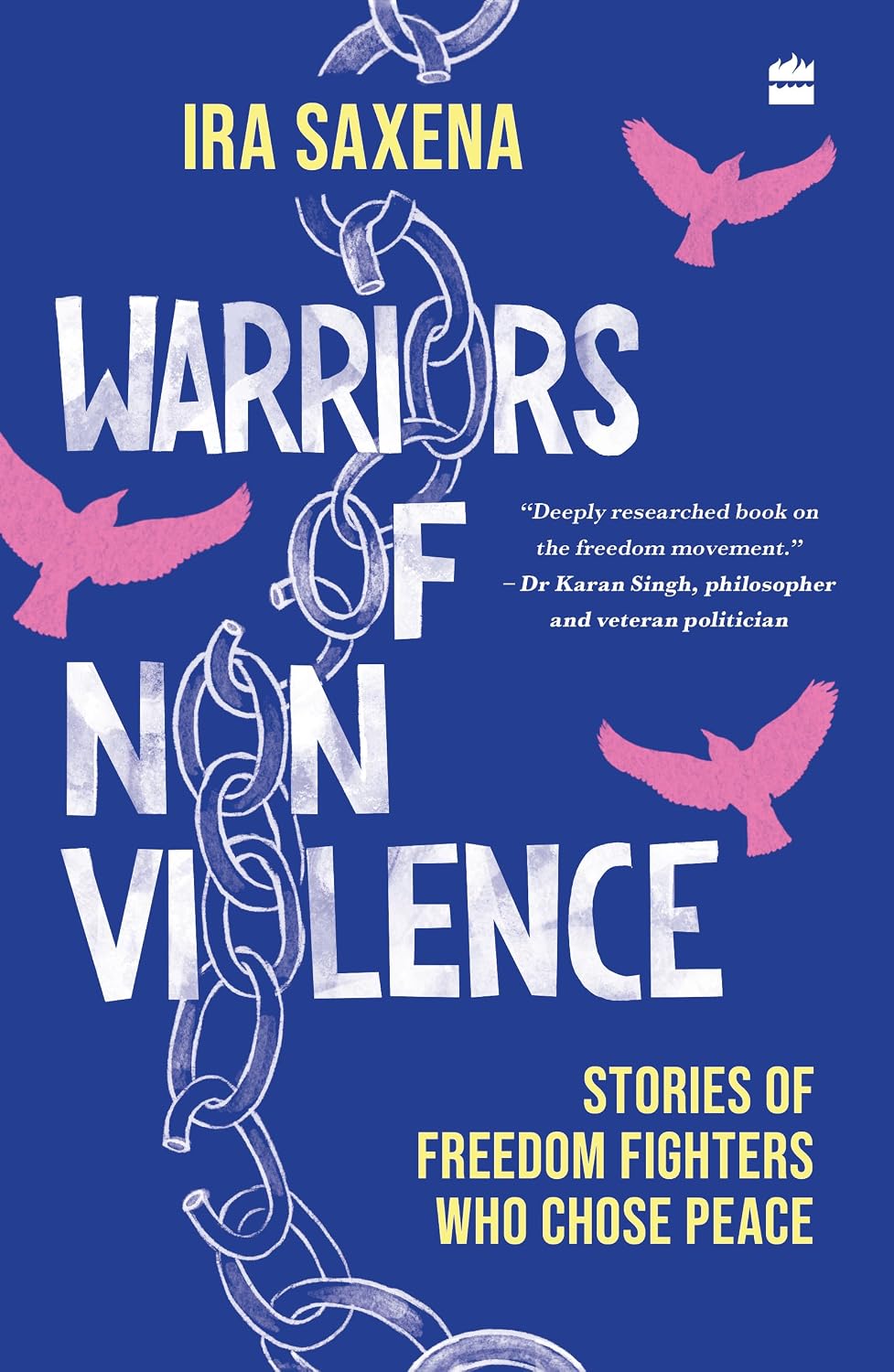
India’s freedom struggle has been told countless times, but much of that history revolves around a familiar set of names. Ira Saxena’s Warriors of Non-Violence, published by HarperCollins India, looks beyond these well-known figures to remember the ordinary men and women whose courage and sacrifice also helped shape India’s journey to independence.
The book brings together ten stories of lesser-known satyagrahis who chose Mahatma Gandhi’s path of non-violence in their fight against British rule. These were people who may not have found a place in history books, but whose acts of courage, conviction and resilience were no less significant. Saxena gives these forgotten figures a face, a voice and, most importantly, a human story.
What makes the book stand out is its combination of historical research and imaginative storytelling. Instead of presenting the freedom movement only through major political events and celebrated leaders, Saxena takes readers into the lives of individuals who experienced the struggle at a deeply personal level. From the salt plains of the Rann of Kutch to the politically charged streets of Meerut, the stories show how the idea of freedom reached ordinary people across different parts of the country.
The book also offers an important perspective on non-violence. Ahimsa is often understood simply as the refusal to use force, but these stories reveal the immense courage and self-discipline it demanded. For the characters in the book, choosing peace did not mean choosing an easier path. It meant confronting fear, accepting hardship and standing firm without surrendering to hatred or violence.
There is a strong personal connection behind Saxena’s work. Her mother, Kamala Chaudhri, was a freedom fighter and parliamentarian, and Saxena grew up hearing and knowing many ordinary satyagrahis associated with her. That personal inheritance appears to have given the book its central purpose: to rescue from obscurity the stories of people whose contribution to India’s freedom might otherwise be forgotten.
For today’s young readers, this is perhaps the book’s most important contribution. The freedom struggle can easily become a collection of dates, movements and famous personalities. Warriors of Non-Violence brings the human element back into that history. It reminds readers that independence was not achieved only in political chambers or through the efforts of famous leaders. It was also built through the courage of countless ordinary citizens who were willing to stand up, endure hardship and remain committed to a larger cause.
The book’s use of imaginative reconstruction means it sits somewhere between historical research and historical fiction. But this approach works in its favour, making stories from a distant and turbulent period more immediate and emotionally accessible.
Ultimately, Warriors of Non-Violence is not simply a collection of stories about forgotten freedom fighters. It is a reminder of how incomplete our understanding of history can be when we remember only its most famous names. By bringing these lesser-known warriors into the light, Ira Saxena expands the familiar narrative of India’s independence and asks readers to remember that freedom was also won by those whose names history failed to preserve.
For anyone interested in the lesser-known human stories behind India’s freedom struggle—and especially for young readers—this is a book worth picking up.
