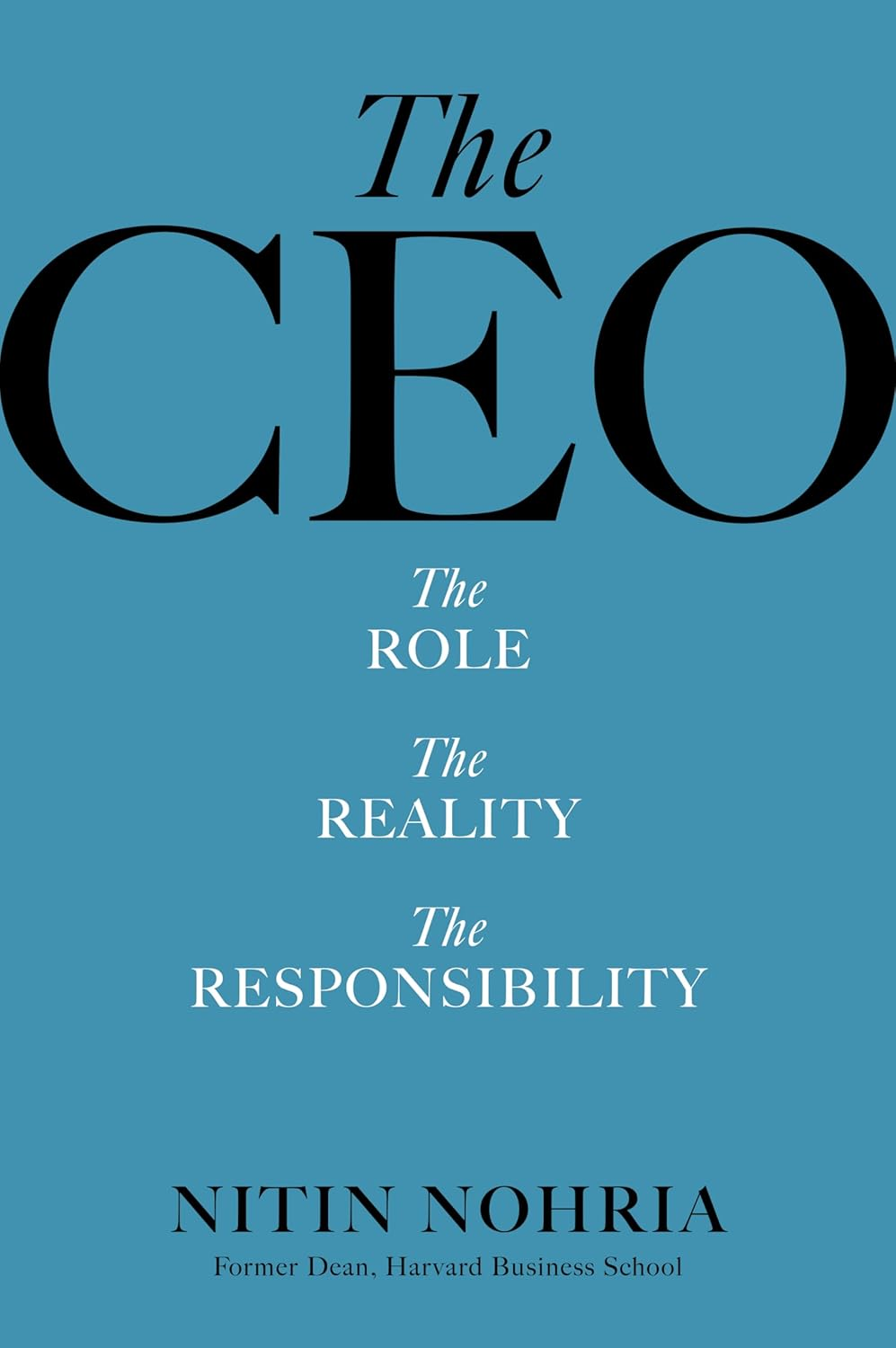
Becoming a chief executive officer is often viewed as the pinnacle of a professional career. But what does it take to lead an entire organisation, manage competing expectations and ensure that a company continues to thrive long after its leader steps down? In The CEO: The Role, the Reality, the Responsibility, Nitin Nohria examines the realities of the corner office, moving beyond the public image of corporate leadership to explore the decisions, pressures and responsibilities that define the role.
Drawing on decades of research, teaching and interactions with hundreds of chief executives through Harvard Business School’s New CEO Workshops, Nohria offers an informed look at what effective leadership involves. He argues that success in earlier managerial roles does not necessarily prepare an individual for the demands of becoming a CEO. The position requires a broader perspective, sound judgement and the ability to influence people across an organisation.
One of the book’s central themes is how CEOs manage their attention and translate strategy into action. While leaders are expected to set a clear direction, their effectiveness depends equally on how they communicate priorities, shape organisational culture and build relationships with employees, board members, investors and other stakeholders. Leadership, in this sense, is not simply about making decisions but also about creating an environment in which others can perform at their best.
Nohria also explores the challenges that come with authority. CEOs must take responsibility without controlling every decision, remain open to new ideas despite being surrounded by people who may hesitate to disagree with them, and respond to changing circumstances without losing sight of long-term goals. These competing demands make the role as much a test of judgement and self-awareness as of business expertise.
The book’s examination of leadership transitions adds another important dimension. Taking charge of an organisation requires listening, understanding its existing strengths and weaknesses, and deciding which priorities need immediate attention. As a CEO’s tenure progresses, the challenge shifts towards sustaining performance, adapting to change and preparing the organisation for its next phase. Eventually, succession becomes a defining responsibility, requiring leaders to develop future talent rather than allowing an organisation’s fortunes to depend on one individual.
This emphasis on succession makes the book particularly relevant in an era when leadership changes can have significant consequences for employees, investors and business strategy. A CEO’s legacy, Nohria suggests, should be measured not only by the results achieved during their tenure but also by the organisation they leave behind.
The book will appeal to aspiring executives, business leaders, management professionals and board members seeking a deeper understanding of corporate leadership. Its research-based approach offers a useful framework for reflecting on the demands of the CEO role, while its practical focus makes the discussion relevant to those preparing for senior leadership positions.
Rather than presenting leadership as a collection of personal qualities or management techniques, Nohria treats it as an ongoing responsibility that evolves with an organisation’s needs. The CEO offers a thoughtful examination of what it means to lead at the highest level, highlighting that the real measure of an effective chief executive lies not merely in exercising authority or delivering results, but in building an organisation capable of succeeding beyond their own tenure.
Book: The CEO: The Role, the Reality, the Responsibility
Author: Nitin Nohria
Publisher: Harvard Business Review Press
