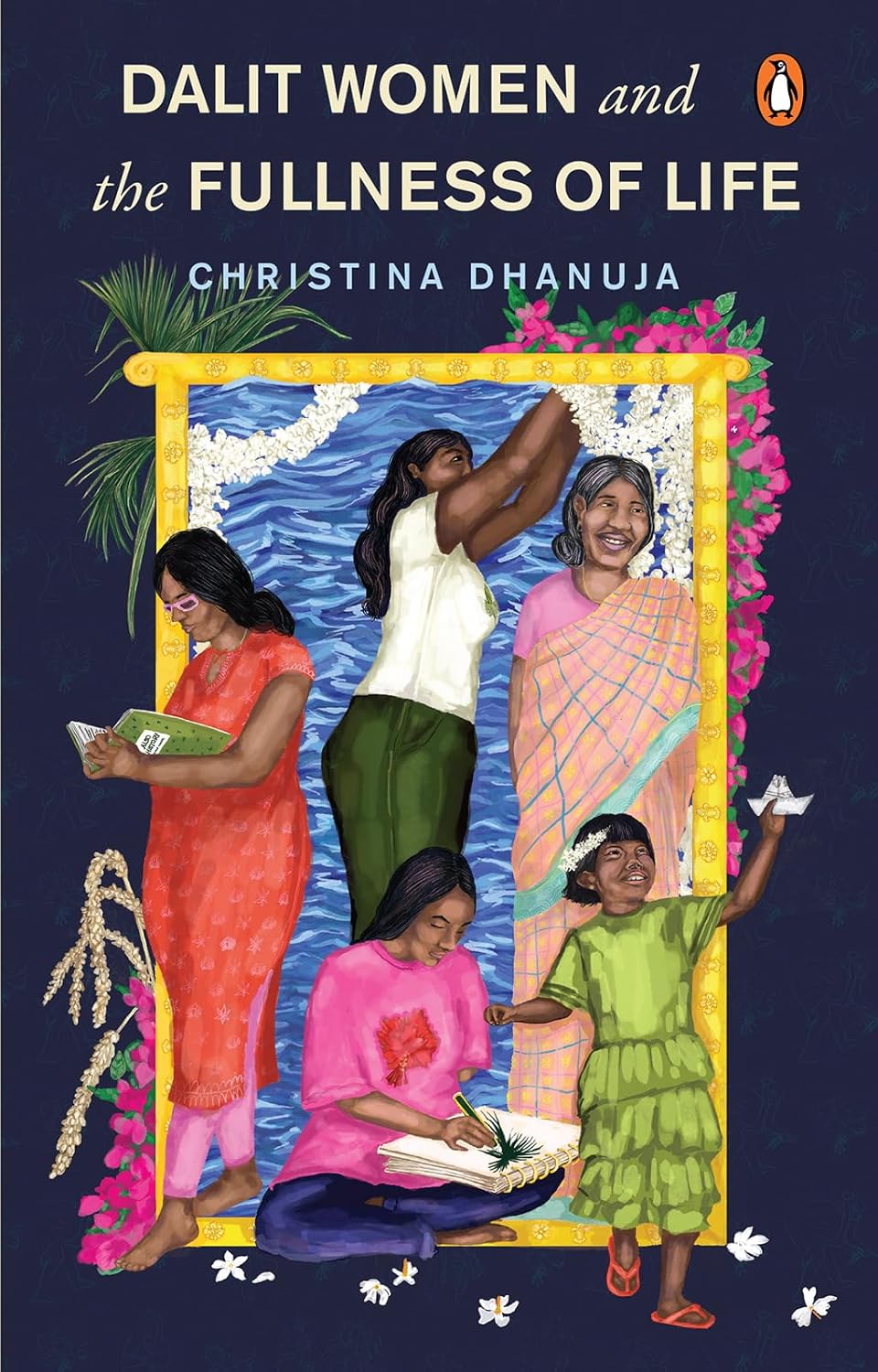
Conversations around caste tend to follow a familiar pattern—structural inequality, violence, survival. While necessary, these frames often flatten lived experience, especially when it comes to Dalit women. Christina Dhanuja’s Dalit Women and the Fullness of Life, published by Penguin Random House India, attempts to shift that lens.
Released in the context of Dalit History Month, the book steps away from dominant narratives and asks a more layered question: what does it mean to live a full life while navigating caste?
Blending memoir with social inquiry, Dhanuja’s work is structured across ten themes—Identity, Work, Community, Sisterhood, Body, Desire, Trauma, Faith, and Joy. The approach is deliberate. Instead of focusing only on oppression or resilience, the book looks at everyday realities—relationships, selfhood, belief systems, and the emotional negotiations that rarely enter mainstream discourse.
At its core, the book argues that caste is not only a structural force but also an internalised one. It shapes how individuals see themselves, how they move through institutions, and how they form connections. This internal dimension—often overlooked in public conversations—becomes central to Dhanuja’s narrative.
The book also widens the scope of caste discourse by engaging with contexts that are less frequently discussed, particularly Dalit Christian identity. By examining how faith intersects with caste and gender, it adds another layer to conversations that are often treated as singular or uniform.
An excerpt from the book illustrates this internal tension with striking clarity. In it, Dhanuja recounts a moment of “coming out” as Dalit to a colleague—only to be told she didn’t “look like one.” The exchange reveals how deeply caste stereotypes persist, even in spaces that consider themselves progressive. It also captures the constant negotiation many Dalit individuals face: whether to reveal their identity, conceal it, or navigate the consequences of both.
The narrative goes further, exploring how markers like language, appearance, and social mobility influence perception—and how individuals adapt, sometimes unconsciously, to fit into dominant spaces. The act of “coming out,” the book suggests, is not simply personal; it is shaped by risk, access, and the availability of social and economic safeguards.
Importantly, Dhanuja resists turning this into a singular prescription. There is no fixed way to assert identity, and no obligation to do so. The book instead leaves space for contradiction—freedom alongside fear, visibility alongside vulnerability.
Written over several years across cities including Chennai, Visakhapatnam, and New York, Dalit Women and the Fullness of Life positions itself as both personal record and analytical work. It uses lived experience not as anecdote, but as a way to understand broader systems.
At a time when caste and gender are widely discussed—particularly in digital spaces—the book redirects attention to what often goes unspoken: how these realities are felt, internalised, and lived on an everyday level.
In doing so, it doesn’t reject existing narratives of struggle—it expands them.
