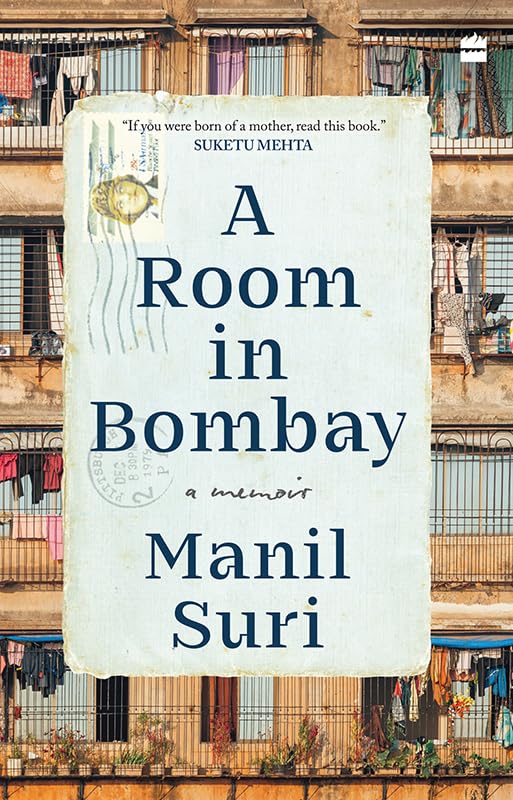
A Room in Bombay: A Memoir is a deeply personal and reflective memoir in which novelist Manil Suri explores memory, identity, and the emotional weight of family obligation.
At the heart of the book is a single cramped apartment room in Bombay (now Mumbai), shared by Suri’s Hindu family alongside Muslim neighbors. Far more than a physical space, the room becomes a powerful symbol of entrapment, belonging, and emotional inheritance. It shapes the lives of his parents—bound in a strained marriage—and deeply influences Suri’s own development as he comes to terms with his sexuality and his desire for independence.
After moving to the United States for his academic career, Suri experiences both freedom and persistent emotional pull. While he builds a life and relationship abroad, he remains tethered to his mother, Prem, and the responsibilities of being an Indian son. This tension between selfhood and filial duty forms one of the memoir’s central conflicts.
A striking feature of the narrative is Suri’s extensive correspondence—thousands of letters written over decades to his mother. These letters reveal a voice that is intimate, humorous, and candid, offering insight into both his emotional distance and enduring attachment.
The memoir also reflects on broader cultural expectations: the weight of tradition, the ideal of the devoted son, and the difficulty of reconciling personal freedom with family loyalty. Suri’s reflections are shaped by both Hindu storytelling traditions and modern diasporic experience, giving the narrative a layered cultural depth.
Ultimately, the book is not only about a physical space but about how memory and obligation can bind people across continents and decades. It is a meditation on love that is neither simple nor resolved—especially the complicated bond between parent and child.
Overall, A Room in Bombay is a poignant, introspective memoir that examines how homes—both physical and emotional—can define, constrain, and ultimately shape a life.
