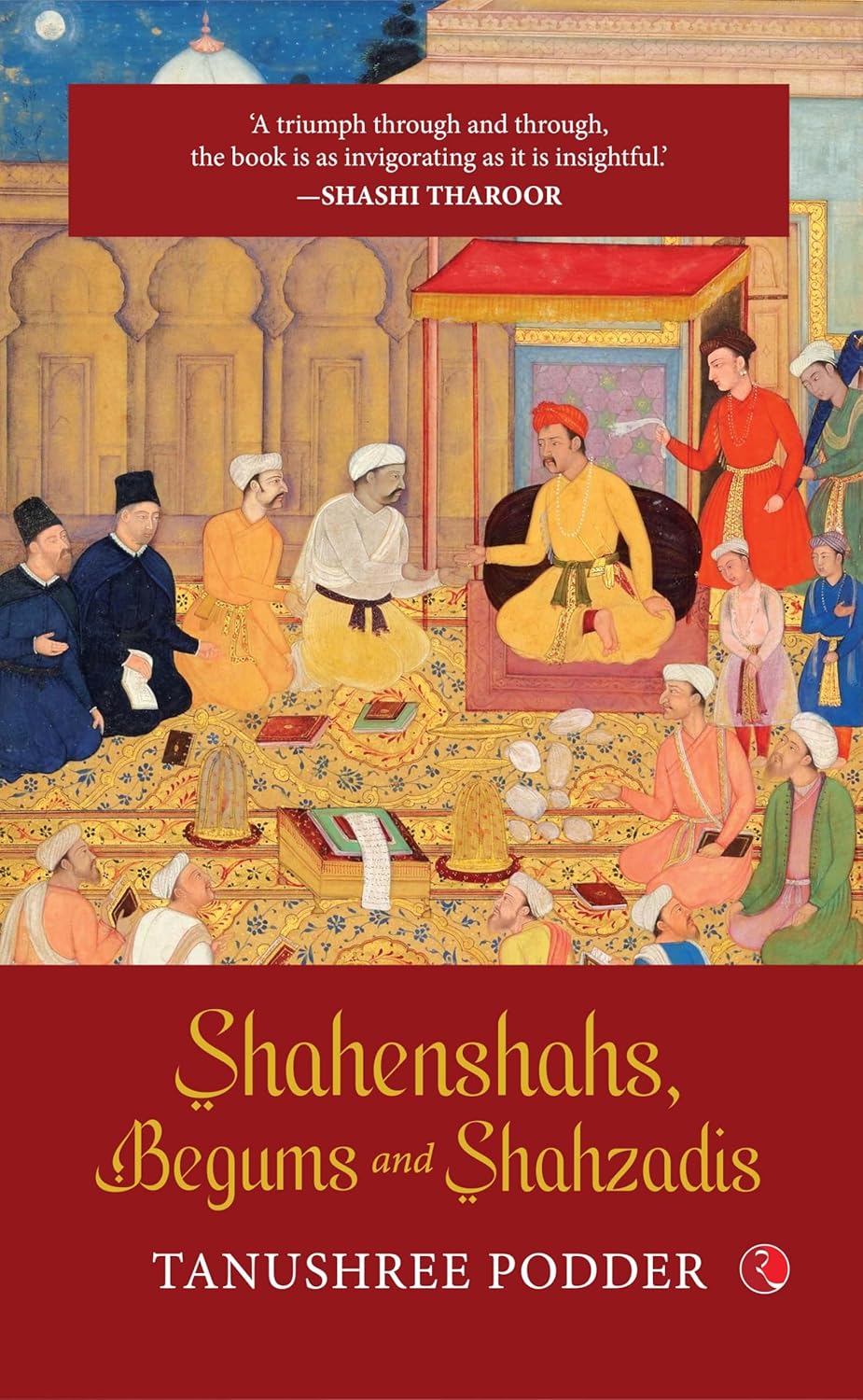
The Mughal Empire has long fascinated historians and readers alike. Its grand forts, magnificent monuments, epic battles and powerful emperors have inspired countless books. But what happened behind the gilded walls of the imperial harem? What private ambitions, rivalries, romances and family conflicts shaped the decisions that altered the course of Indian history?
In Shahenshahs, Begums and Shahzadis, bestselling author Tanushree Podder invites readers into the intimate world of the Mughal court, shifting the focus from empire-building to the men and women who lived, loved and wielded power within it.
More Than Kings and Conquests
Rather than presenting the Mughals as distant historical figures, Podder paints them as complex individuals navigating the demands of power, family and legacy. The emperors emerge not merely as conquerors and administrators but as husbands, fathers, sons and rivals. Equally compelling are the begums and shahzadis whose influence often extended far beyond the private quarters they occupied.
The result is a narrative that transforms familiar historical names into vivid personalities, revealing how personal relationships frequently dictated political outcomes.
Women at the Centre of Power
One of the book’s most engaging aspects is its attention to the women of the Mughal household. Far from being passive observers, these royal women appear as influential strategists, patrons and power brokers. Their stories add depth and nuance to a history often told through the actions of emperors alone.
Podder’s portrayal highlights the subtle but significant ways in which royal women shaped succession battles, diplomatic decisions and court politics, enriching the reader’s understanding of the empire.
Storytelling Meets History
Drawing on her strengths as a novelist and historian, Podder delivers a narrative that is both informative and highly readable. The prose flows effortlessly, balancing historical detail with dramatic storytelling. The book’s substantial length allows for a sweeping exploration of generations of Mughal rulers while maintaining reader engagement throughout.
The author’s ability to bring historical settings and personalities to life makes the work accessible even to those who may not be regular readers of history.
Shahenshahs, Begums and Shahzadis succeeds in opening a rarely explored window into the Mughal world. It reminds readers that empires are not shaped solely by armies and policies but also by human emotions, family loyalties, ambitions and personal choices.
For anyone fascinated by royal history, court intrigue and the untold stories behind famous dynasties, this book offers a rewarding and engrossing journey into the heart of the Mughal Empire.
This is a richly textured and engaging account that places the human drama of the Mughal court at centre stage. An essential read for lovers of Indian history and historical narrative.
