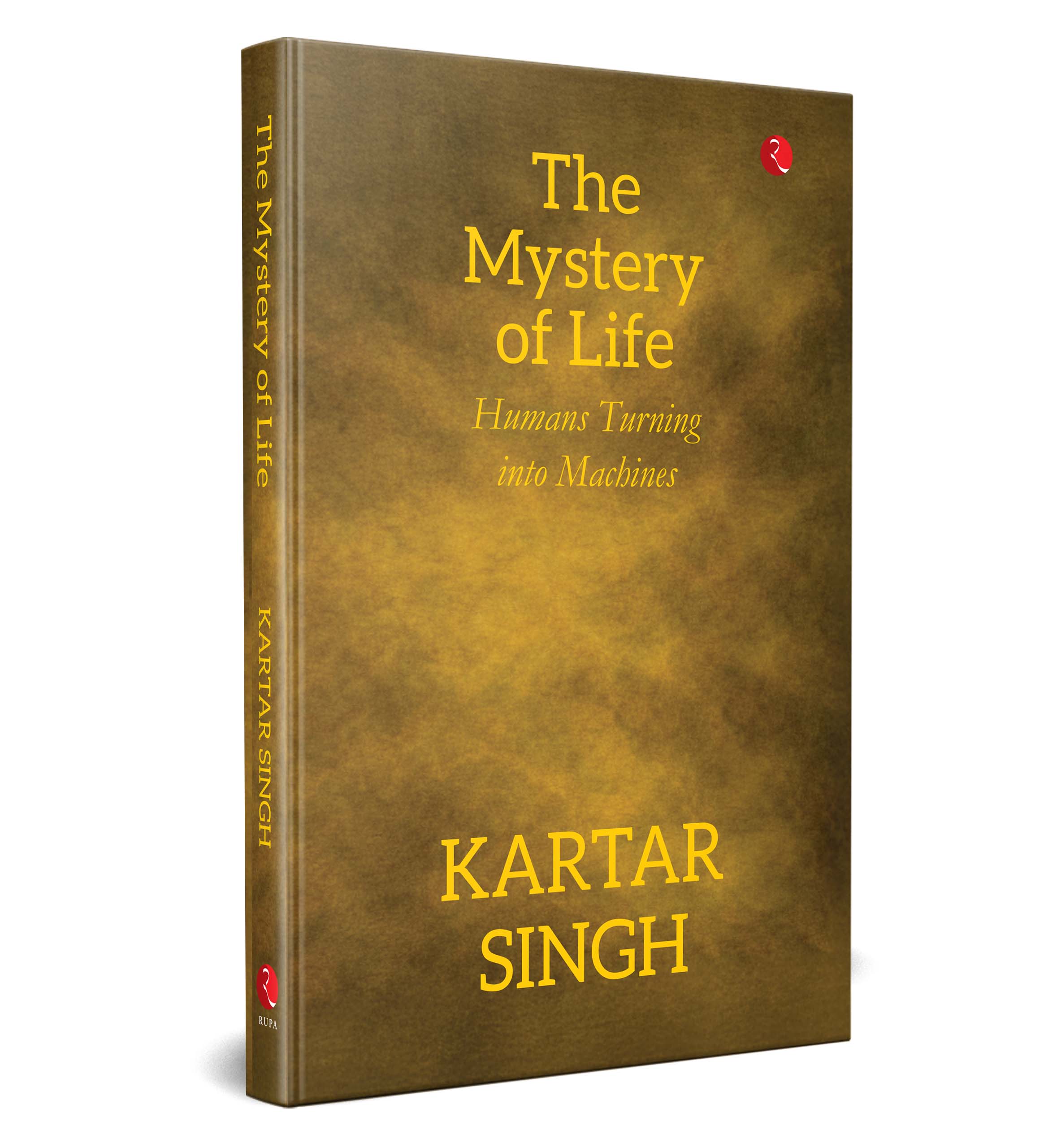
There are books that inform, and then there are books that quietly unsettle you—forcing you to pause and ask difficult questions about the way you live. The Mystery of Life: Humans Turning into Machines belongs to the latter.
At its core, this is not merely a philosophical book. It is a deeply introspective meditation on what it means to be human in an age increasingly governed by speed, distraction and automation. Kartar Singh explores a haunting possibility: that somewhere along the way, humanity has forgotten itself.
The book begins with a powerful idea—that the greatest tragedy of human life is not material struggle, but spiritual forgetfulness. We become so consumed by routine, ambition, survival and fleeting pleasures that we slowly lose touch with our inner consciousness. In chasing productivity and perfection, life starts moving mechanically, almost like a programmed system running on habit rather than awareness.
What makes the book strikingly relevant is how it connects this inner emptiness with the modern world of Artificial Intelligence and human-like machines. Singh does not fear technology itself; instead, he uses it as a mirror. The real concern, he suggests, is not machines becoming human—but humans becoming machine-like: emotionally distant, spiritually exhausted and disconnected from their true selves.
Throughout the book, there is an undercurrent of quiet urgency. Relationships feel strained, minds remain restless, and happiness becomes temporary because people search for fulfilment outside themselves while ignoring the deeper source within. Singh argues that suffering often begins with false assumptions about identity—that we mistake the body and mind for the self, forgetting the timeless consciousness that exists beyond both.
Yet the book is not pessimistic. Beneath its warnings lies a deeply hopeful message. It reminds readers that awareness can still be reclaimed, that inner awakening is possible, and that peace and ananda are not distant ideals but natural states buried beneath layers of conditioning and noise.
What gives the writing its sincerity is its simplicity. The thoughts are philosophical, but the emotions behind them feel personal and genuine. Rather than sounding preachy, the book reads like a calm conversation with someone who has spent years reflecting on life’s deeper questions.
In a world constantly demanding attention, speed and output, The Mystery of Life: Humans Turning into Machines gently asks readers to slow down and rediscover the forgotten self hidden beneath routine and distraction. It is a contemplative and timely work—one that lingers long after the final page is turned.
